Objective of the study
To verify the feasibility of designing, building and testing an ultra-fast, magnetically levitated, low-energy transport system, laying the basis for an innovative, sustainable and commercially competitive transport mode.

HyperTransfer · Veneto, Italy
Hyperworks ने इटली में Hyper Transfer को बढ़ावा दिया और औद्योगिक गठबंधन के गठन का समर्थन किया जो Hyperbuilders बन गया। Webuild–Leonardo कंसोर्टियम ने तब CAV का टेंडर जीता और प्रोग्राम के तीन चरणों में से पहले को पूरा किया।
Explore the results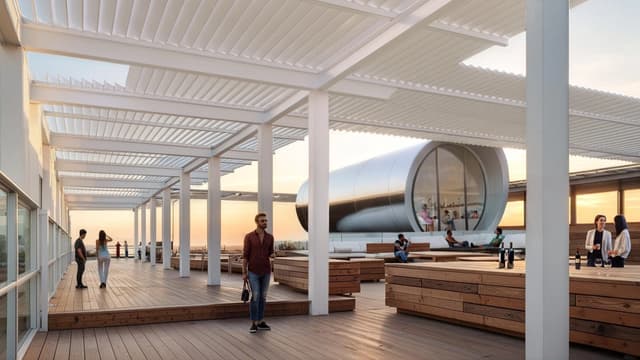
MIT · वेनेतो क्षेत्र · CAV प्रोटोकॉल
Hyperbuilders · Webuild + Leonardo
सकारात्मक व्यवहार्यता मूल्यांकन
म्यूनिख में CAV प्रस्तुति
डिज़ाइन सक्रियण और वित्तपोषण के अधीन रहता है
Hyperworks’ role
01 / 03
Hyperworks, तब Hyperloop Italia, ने इटली में परियोजना को बढ़ावा दिया, संस्थागत और औद्योगिक संबंध बनाए और उस समूह के गठन में मदद की जो Hyperbuilders बन गया। सार्वजनिक टेंडर ने उस गति को CAV द्वारा औपचारिक रूप से शासित एक प्रोग्राम में बदल दिया।
स्रोत पारदर्शिता: Hyperworks की उत्पत्ति भूमिका एक कंपनी खाता है; पुरस्कार, प्रबंधन और चरण 1 परिणाम CAV, वेनेतो क्षेत्र और परियोजना स्रोतों द्वारा दस्तावेज़ीकृत हैं।
Hyperbuilders + public governance
Promotion and coordination
Promoted the project in Italy and the industrial coalition later formalised as Hyperbuilders. This originating role is reported as Hyperworks’ company history.
Contracting authority and PPMO
Concessioni Autostradali Venete led the innovation partnership, operational management and publication of the results.
Public management
They sit with CAV on the Technical Committee and define the institutional and funding framework for later phases.
Hyperbuilders consortium
A global infrastructure leader and a major aerospace, defence and complex-systems group: together they won the tender and delivered Phase 1.
Integration and certification
The FS Group companies supported system integration, railway engineering and the route toward approval and certification.
Technical-scientific expertise
Supported the PPMO and produced independent expert assessments of technology maturity and transferability.
Appointed designers
Design, engineering, quality assurance and hyperloop technology capabilities integrated into the feasibility assessment.
Technology and research
Thyssenkrupp, PROSE, WayAssauto and the Milan, Turin and Bari polytechnic universities contributed specialist expertise.
व्यवहार्यता अध्ययन · सारांश
Phase 1 was a full feasibility assessment, run by the Hyperbuilders consortium under contracting authority CAV and closed with a positive outcome. This is a summary of how it was organised, against which criteria, and what it established.
To verify the feasibility of designing, building and testing an ultra-fast, magnetically levitated, low-energy transport system, laying the basis for an innovative, sustainable and commercially competitive transport mode.
The innovation partnership brought together the public side (MIT, Veneto Region, CAV) and industrial capability (Webuild–Leonardo) in a collaborative model, with a PPMO run by CAV and the University of Padua, a Technical Committee, and Italferr and Italcertifer as system integrators.
Eight technical groups covering vehicles, infrastructure, system integration, certification and approval, and stations; four management groups covering economics, multidisciplinary coordination and intellectual property; weekly meetings and workshops with CAV’s PPMO. The work spanned eight countries and over 1,000 hours of conference calls.
Wherever possible, select technologies that are already commercially available, tested or designed and obtainable without proprietary patents or licences. This lowers technology risk and ties the system to verifiable components.
Every subsystem was assessed on NASA-derived TRL (1–9) and MRL (1–10) scales. The largest challenges remain ultra-high speed in vacuum, thermal-exchange management, the capsule’s enclosed environment and continuous data-transmission requirements.
Some of the technologies developed already improve existing high-speed systems in the medium term: inverters, braking and cooling systems, communication and signalling, aerodynamics and on-board energy sources.
Completed with a positive outcome on 12.11.24
Subject to activation and funding
Construction of the Test Track (pilot route)
CAV public data · Phase 1
CAV द्वारा सार्वजनिक किए गए परिणामों का Hyperworks संपादकीय सारांश। संख्याएं अध्ययन और प्रस्तावित सिस्टम का वर्णन करती हैं, पहले से बनाई गई बुनियादी ढांचे का नहीं।
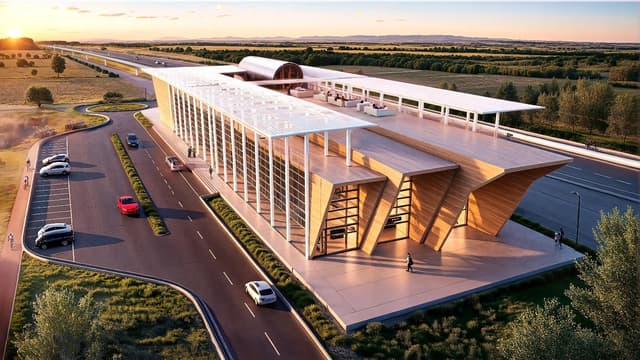
लगभग 10 किमी ऊंचा परीक्षण ट्रैक, एकल द्विदिशात्मक ट्यूब, स्वचालित संचालन और डिज़ाइन के दौरान पुष्टि के लिए एक प्रारंभिक 50 Pa संदर्भ दबाव।
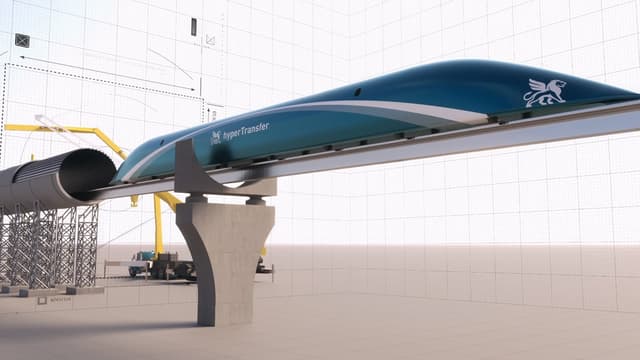
630 किमी/घंटा का परीक्षण ट्रैक लक्ष्य; 38 यात्रियों या 12 टन माल के लिए कैप्सूल। 1,000 किमी/घंटा केवल भविष्य के व्यावसायिक-मार्ग लक्ष्य के रूप में उल्लेखित।
सुरक्षा प्रबंधन योजना, प्रारंभिक खतरा रजिस्टर, एवैक्यूएशन खुलासे, सेक्शन आइसोलेशन और एक प्रारंभिक आवश्यकताओं-और-मानक मैट्रिक्स।
वैक्यूम में अल्ट्रा-हाई स्पीड, थर्मल एक्सचेंज, कैप्सूल का बंद वातावरण, निरंतर डेटा ट्रांसमिशन और लंबे ट्रैक पर पंपिंग अनुक्रम।
CAV की ऊर्जा तुलना एक काल्पनिक 250 किमी मार्ग के लिए एक प्रारंभिक मॉडल है, जिसमें 70% विश्वास स्तर उल्लेखित है, डिज़ाइन चरण के दौरान सत्यापित करने के लिए।
Transport assessment
गाड़ियां सामान्यतः अधिक प्रतिस्पर्धी रहती हैं; Hyper Transfer भीड़ भरी शिखर घंटों में अकेले यात्रियों के लिए बेहतर होता है।
हाई-स्पीड रेल आगे है। Hyper Transfer वार्षिक 4 मिलियन यात्रियों से ऊपर तुलनीय हो जाता है और हवाई से कम।
प्रत्येक मूल-गंतव्य जोड़ी के लिए वार्षिक 4–5 मिलियन यात्रियों से ऊपर Hyper Transfer सबसे प्रतिस्पर्धी विकल्प के रूप में उभरता है।
हवाई सामान्यतः आगे है; वार्षिक 4–5 मिलियन यात्रियों से ऊपर Hyper Transfer उपयोगकर्ताओं के लिए अधिक लाभदायक हो जाता है।
सिमुलेशन कार, हाई-स्पीड रेल, हवाई और इटालियन संदर्भ में एक काल्पनिक व्यावसायिक Hyper Transfer सिस्टम की तुलना करते हैं। ये मांग या लाभप्रदता की भविष्यवाणी नहीं हैं।
Project film · Italian
फिल्म लाइव फुटेज और कॉन्सेप्ट विज़ुअलाइज़ेशन के माध्यम से प्रोग्राम, बहु-विषयक काम और परीक्षण ट्रैक दृष्टिकोण को प्रस्तुत करती है।
फोटो-वास्तविक अनुक्रम परियोजना विज़ुअलाइज़ेशन हैं, मौजूदा Hyper Transfer बुनियादी ढांचे के फुटेज नहीं।
Open results · CAV
Data and presentation published by CAV · PDF · 3.5 MB
English version of the results published by CAV · PDF · 2.1 MB
Hyperworks प्रदान किए गए प्रकाशन प्रतिलिपियों को उपलब्ध कराता है। बौद्धिक संपदा, डेटा और परिणाम CAV और परियोजना शासन को आनुपातिक रूप से आसक्त रहते हैं।
Verified status · 28 Jul 2026
03 / 03
चरण 1 सकारात्मक रूप से समाप्त हुआ। अगला चरण प्रोटोटाइप और प्रमाणिकता ट्रैक का डिज़ाइन है। CAV दस्तावेज़ों के अनुसार, चरण 2 और 3 का सक्रियकरण सफल पूर्ववर्ती चरण और वास्तविक वित्तपोषण के अधीन रहता है, जिसमें राष्ट्रीय और यूरोपीय स्रोत अभी भी पहचाने जाने बाकी हैं।
Hyperworks प्रोग्राम निरंतरता का समर्थन करने के लिए तैयार है, लेकिन परीक्षण ट्रैक वित्तपोषित, अनुबंधित या निर्मित नहीं है।