Objective of the study
To verify the feasibility of designing, building and testing an ultra-fast, magnetically levitated, low-energy transport system, laying the basis for an innovative, sustainable and commercially competitive transport mode.
HyperTransfer · Veneto, Italy
Hyperworks promoted Hyper Transfer in Italy and the formation of the industrial coalition that became Hyperbuilders. The Webuild–Leonardo consortium then won CAV’s tender and completed the first of the programme’s three phases.
Explore the results
MIT · Veneto Region · CAV protocol
Hyperbuilders · Webuild + Leonardo
Positive feasibility assessment
CAV presentation in Munich
Design remains subject to activation and funding
Hyperworks’ role
01 / 03
Hyperworks, then Hyperloop Italia, promoted the project in Italy, built institutional and industrial relationships and helped form the group that became Hyperbuilders. The public tender turned that momentum into a programme formally governed by CAV.
Source transparency: Hyperworks’ originating role is a company account; the award, management and Phase 1 results are documented by CAV, Veneto Region and project sources.
Hyperbuilders + public governance
Promotion and coordination
Promoted the project in Italy and the industrial coalition later formalised as Hyperbuilders. This originating role is reported as Hyperworks’ company history.
Contracting authority and PPMO
Concessioni Autostradali Venete led the innovation partnership, operational management and publication of the results.
Public management
They sit with CAV on the Technical Committee and define the institutional and funding framework for later phases.
Hyperbuilders consortium
A global infrastructure leader and a major aerospace, defence and complex-systems group: together they won the tender and delivered Phase 1.
Integration and certification
The FS Group companies supported system integration, railway engineering and the route toward approval and certification.
Technical-scientific expertise
Supported the PPMO and produced independent expert assessments of technology maturity and transferability.
Appointed designers
Design, engineering, quality assurance and hyperloop technology capabilities integrated into the feasibility assessment.
Technology and research
Thyssenkrupp, PROSE, WayAssauto and the Milan, Turin and Bari polytechnic universities contributed specialist expertise.
Feasibility study · summary
Phase 1 was a full feasibility assessment, run by the Hyperbuilders consortium under contracting authority CAV and closed with a positive outcome. This is a summary of how it was organised, against which criteria, and what it established.
To verify the feasibility of designing, building and testing an ultra-fast, magnetically levitated, low-energy transport system, laying the basis for an innovative, sustainable and commercially competitive transport mode.
The innovation partnership brought together the public side (MIT, Veneto Region, CAV) and industrial capability (Webuild–Leonardo) in a collaborative model, with a PPMO run by CAV and the University of Padua, a Technical Committee, and Italferr and Italcertifer as system integrators.
Eight technical groups covering vehicles, infrastructure, system integration, certification and approval, and stations; four management groups covering economics, multidisciplinary coordination and intellectual property; weekly meetings and workshops with CAV’s PPMO. The work spanned eight countries and over 1,000 hours of conference calls.
Wherever possible, select technologies that are already commercially available, tested or designed and obtainable without proprietary patents or licences. This lowers technology risk and ties the system to verifiable components.
Every subsystem was assessed on NASA-derived TRL (1–9) and MRL (1–10) scales. The largest challenges remain ultra-high speed in vacuum, thermal-exchange management, the capsule’s enclosed environment and continuous data-transmission requirements.
Some of the technologies developed already improve existing high-speed systems in the medium term: inverters, braking and cooling systems, communication and signalling, aerodynamics and on-board energy sources.
Completed with a positive outcome on 12.11.24
Subject to activation and funding
Construction of the Test Track (pilot route)
CAV public data · Phase 1
Hyperworks editorial summary of results made public by CAV. The numbers describe the study and proposed system, not infrastructure already built.
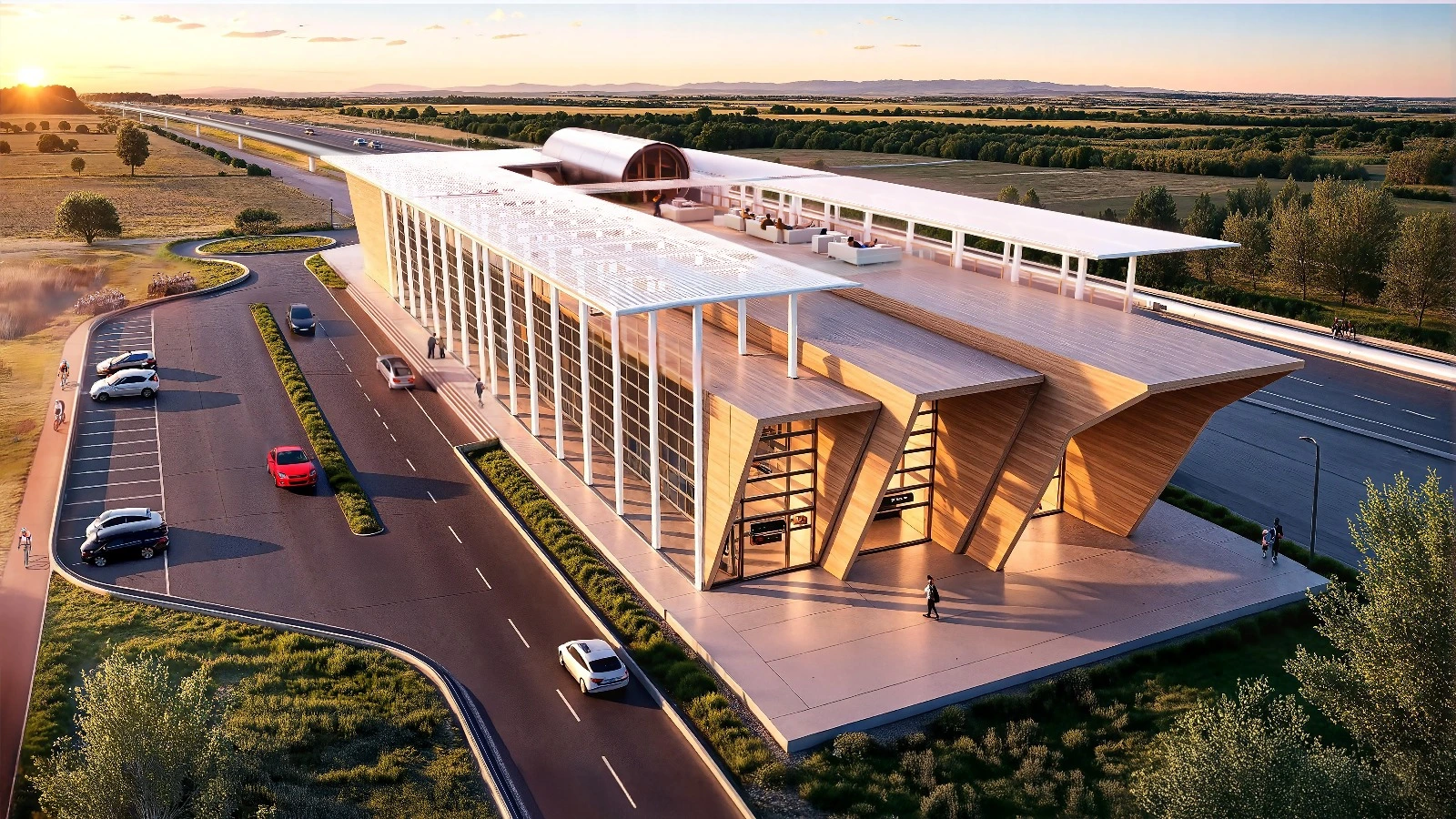
Approximately 10 km elevated test track, single bidirectional tube, automatic operation and an initial 50 Pa reference pressure to be confirmed during design.
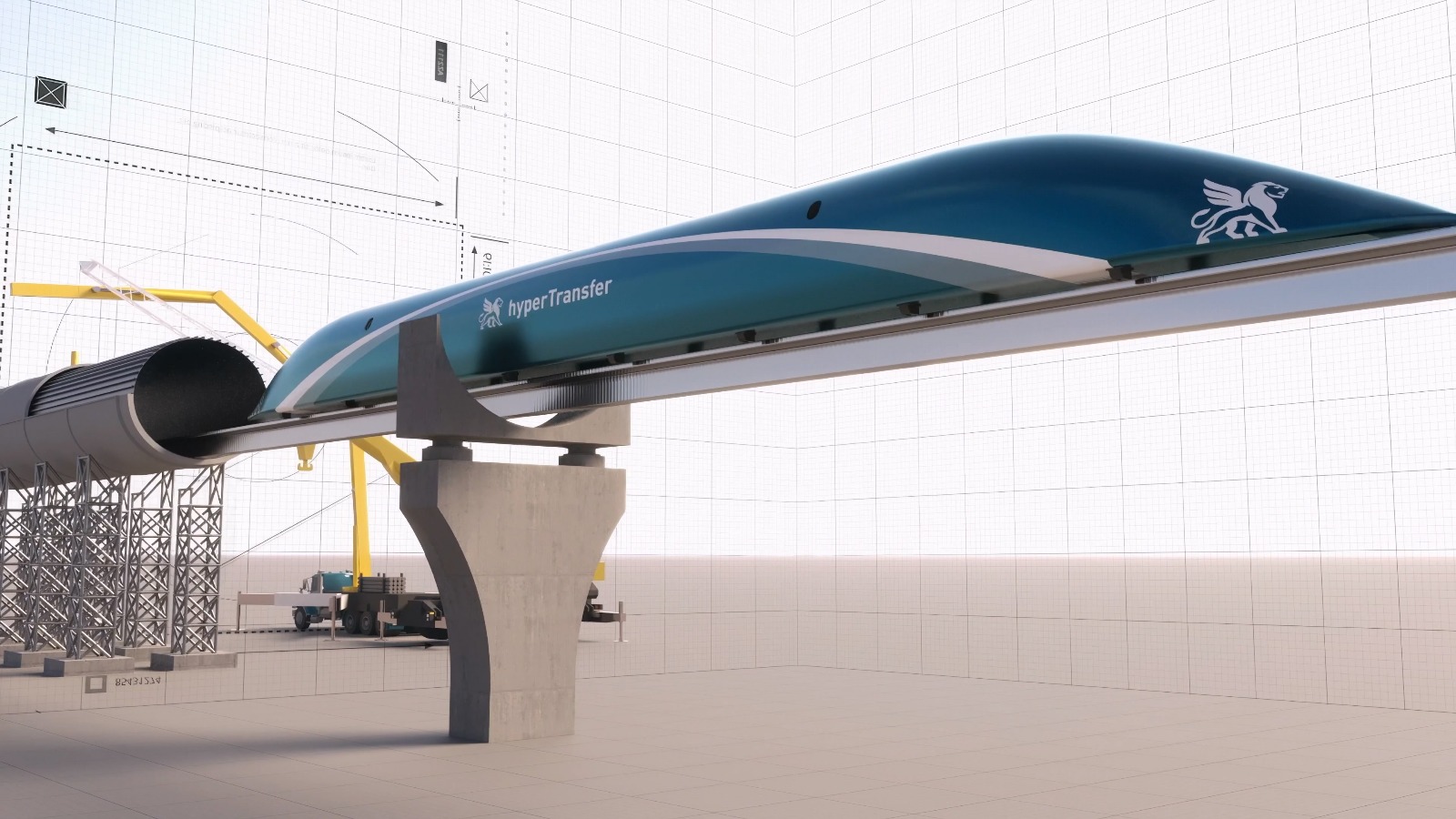
A 630 km/h test-track target; capsules for 38 passengers or 12 tonnes of freight. 1,000 km/h stated only as a future commercial-route objective.
Safety management plan, preliminary hazard register, evacuation openings, section isolation and an initial requirements-and-standards matrix.
Ultra-high speed in vacuum, thermal exchange, the capsule’s enclosed environment, continuous data transmission and pumping sequences over a long track.
CAV’s energy comparison is a preliminary model for a hypothetical 250 km route, with a stated 70% confidence level, to be validated during the design phase.
Transport assessment
Cars remain generally more competitive; Hyper Transfer improves for solo travellers during congested peak hours.
High-speed rail leads. Hyper Transfer becomes comparable above 4 million annual passengers and lower than air.
Hyper Transfer emerges as the most competitive option above 4–5 million annual passengers per origin-destination pair.
Air leads in general; above 4–5 million annual passengers Hyper Transfer becomes more advantageous to users.
The simulations compare cars, high-speed rail, air and a hypothetical commercial Hyper Transfer system in the Italian context. They are not a demand or profitability forecast.
Project film · Italian
The film presents the programme, multidisciplinary work and test-track vision through live footage and concept visualisations.
Photorealistic sequences are project visualisations, not footage of existing Hyper Transfer infrastructure.
Open results · CAV
Data and presentation published by CAV · PDF · 3.5 MB
English version of the results published by CAV · PDF · 2.1 MB
Hyperworks makes the supplied publication copies available. Intellectual property, data and results remain attributed to CAV and the project governance.
Verified status · 28 Jul 2026
03 / 03
Phase 1 closed positively. The next step is design of the prototypes and certification track. According to CAV documents, activation of Phases 2 and 3 remains subject to the successful preceding phase and to actual funding, with national and European sources still to be identified.
Hyperworks is ready to support programme continuity, but the test track is not funded, contracted or built.