

History of Hyperloop · With sources
Two centuries of ideas inside a tube.
Hyperloop did not begin in 2013. The white paper gave a global language to a much older history of pressure, vacuum, levitation and high-speed transport.
42 source-linked milestones
Pneumatic origins
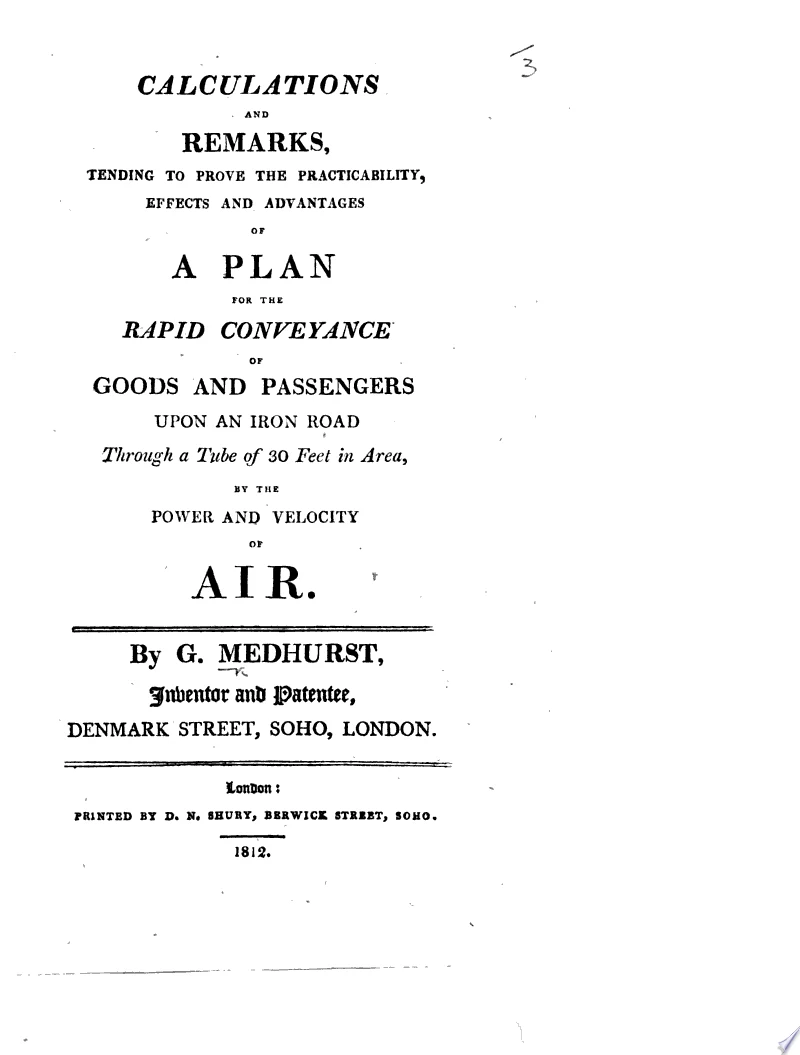
George Medhurst patents atmospheric transport
The British inventor proposed using pressure differentials to move goods through a tube. It was an ancestor of pneumatic transport, not yet an evacuated high-speed railway.
Pneumatic origins
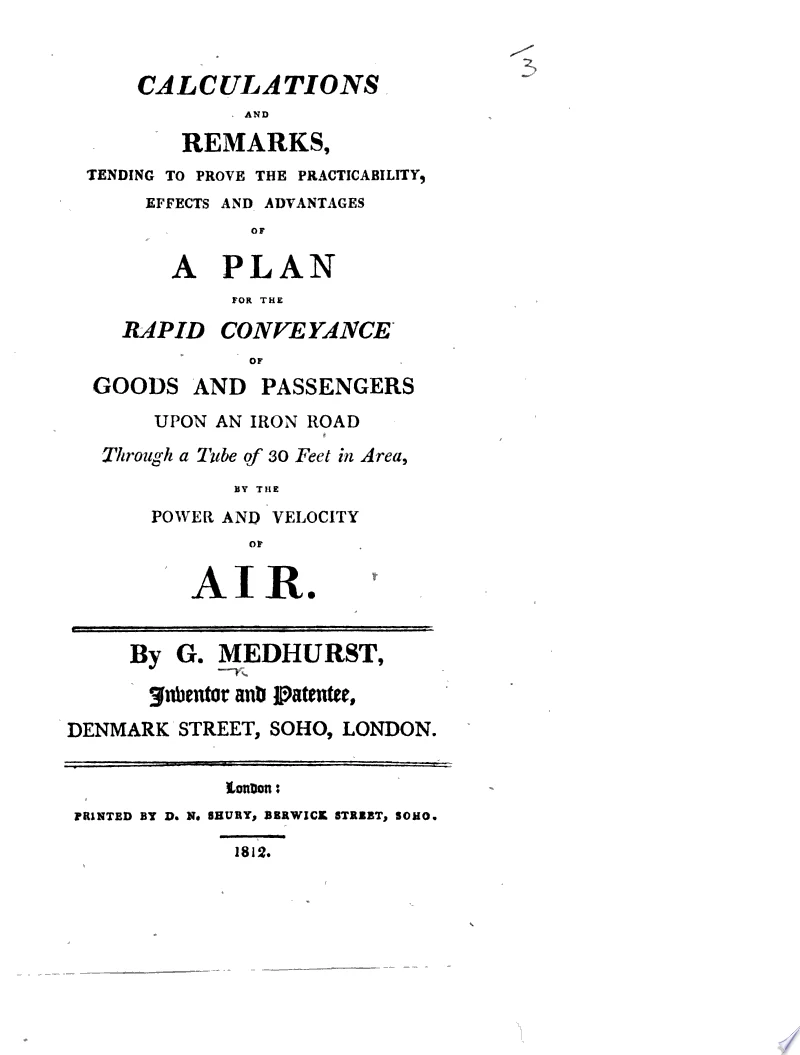
Medhurst publishes a passenger-transport proposal
His treatise extended atmospheric propulsion from parcels to carriages, helping shape the long history of tube-based transport concepts.
Pneumatic origins
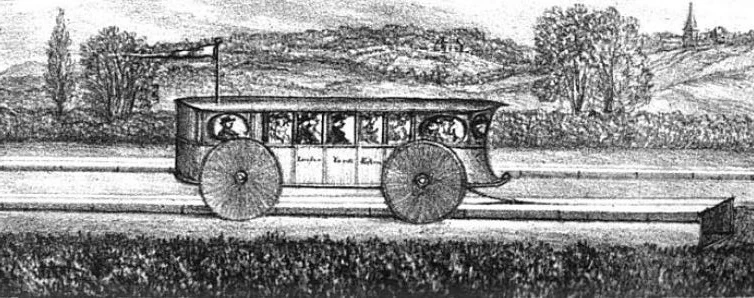
Vallance demonstrates a full-carriage pneumatic railway
A short Brighton demonstration placed the entire vehicle inside a large tube and used air pressure for movement—an important architectural precursor.
Pneumatic origins
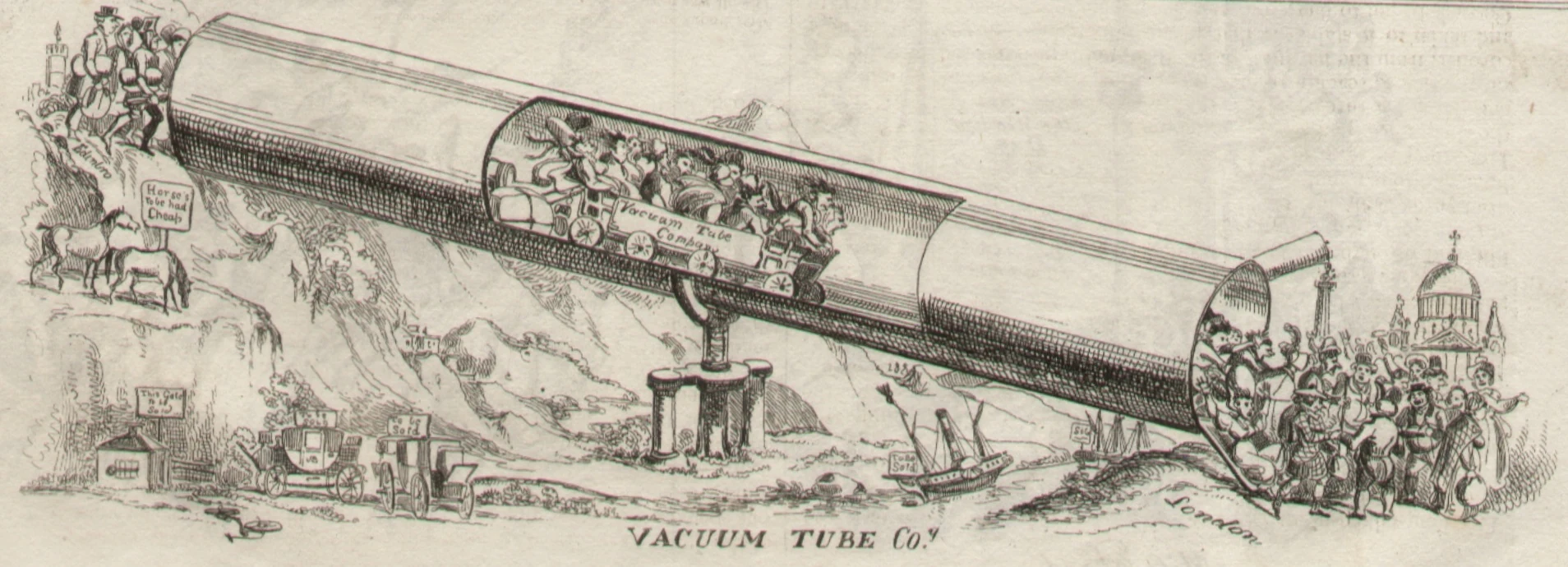
A London–Edinburgh vacuum tunnel is proposed
The London and Edinburgh Vacuum Tunnel Company described a pressure-driven intercity system in The Mechanics’ Magazine. It remained a proposal, but it was the first to connect tube transport with long-distance passenger travel.
Pneumatic origins
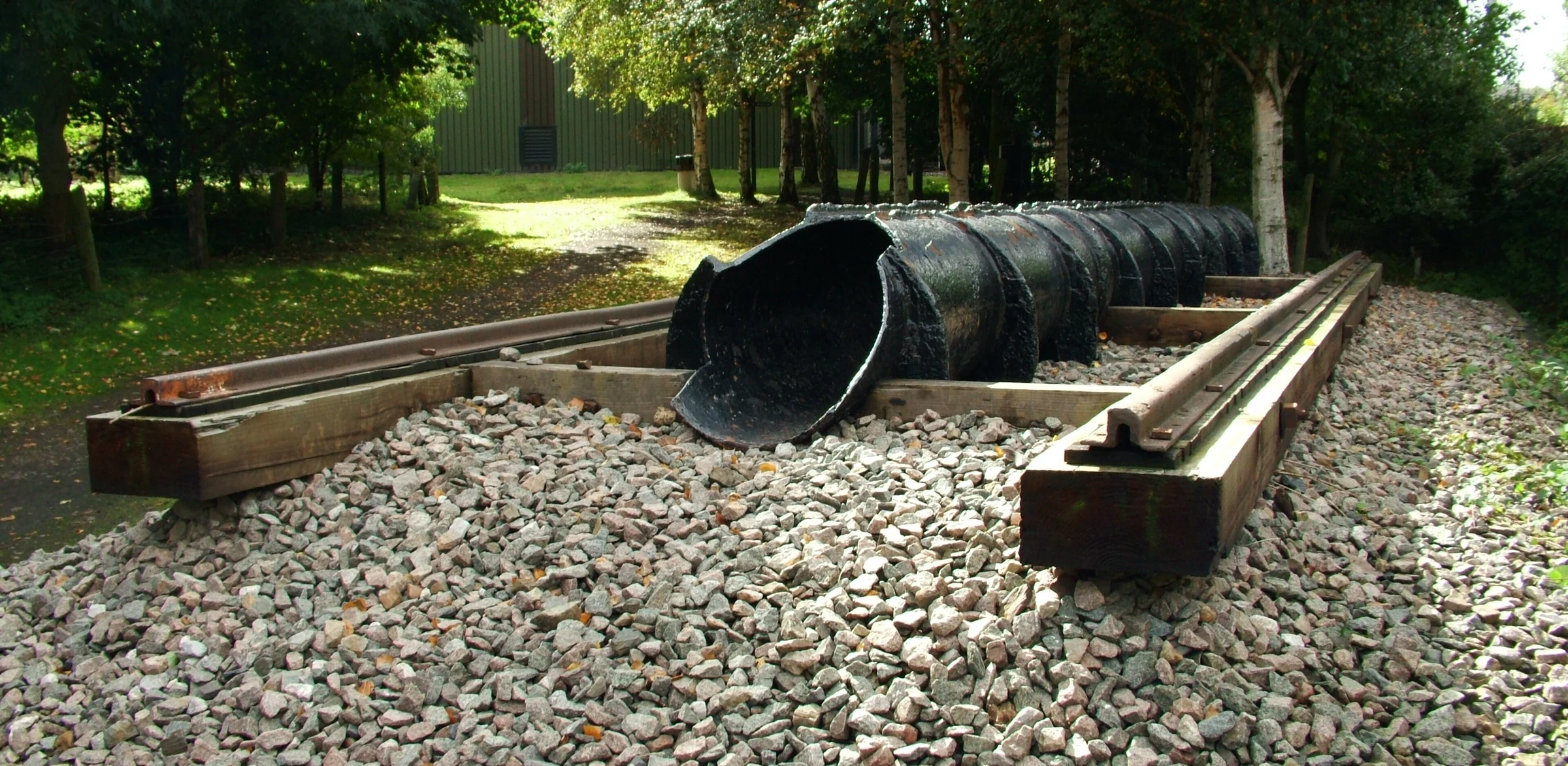
Atmospheric railways enter public service
Lines at Dalkey, Croydon and South Devon tested atmospheric propulsion at operational scale. Seal problems, maintenance and costs limited their success.
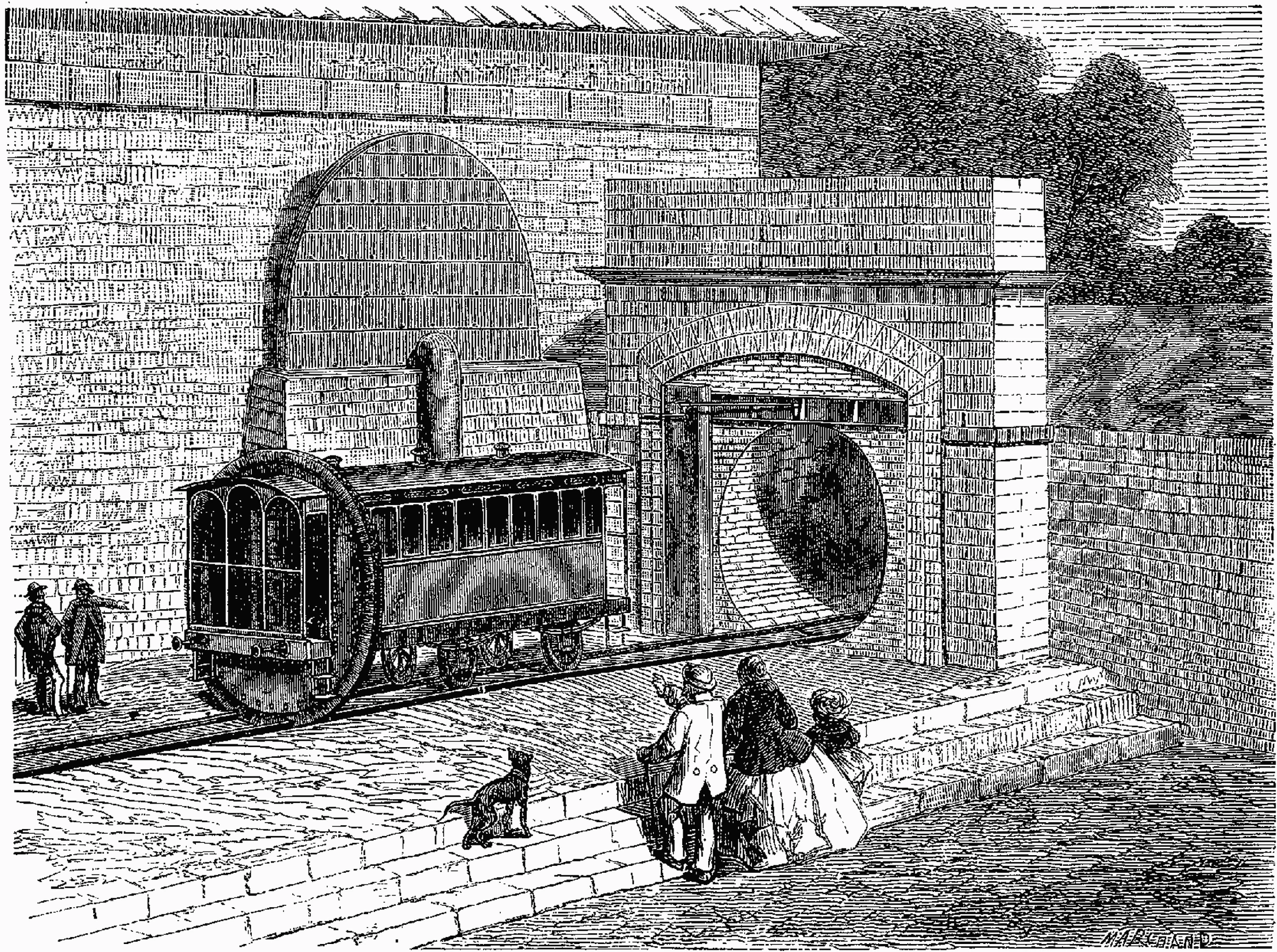
Pneumatic origins
The Crystal Palace pneumatic railway carries passengers
A fan propelled a carriage through a short tunnel in London, showing passenger operation in a sealed tunnel decades before modern vacuum-train proposals.
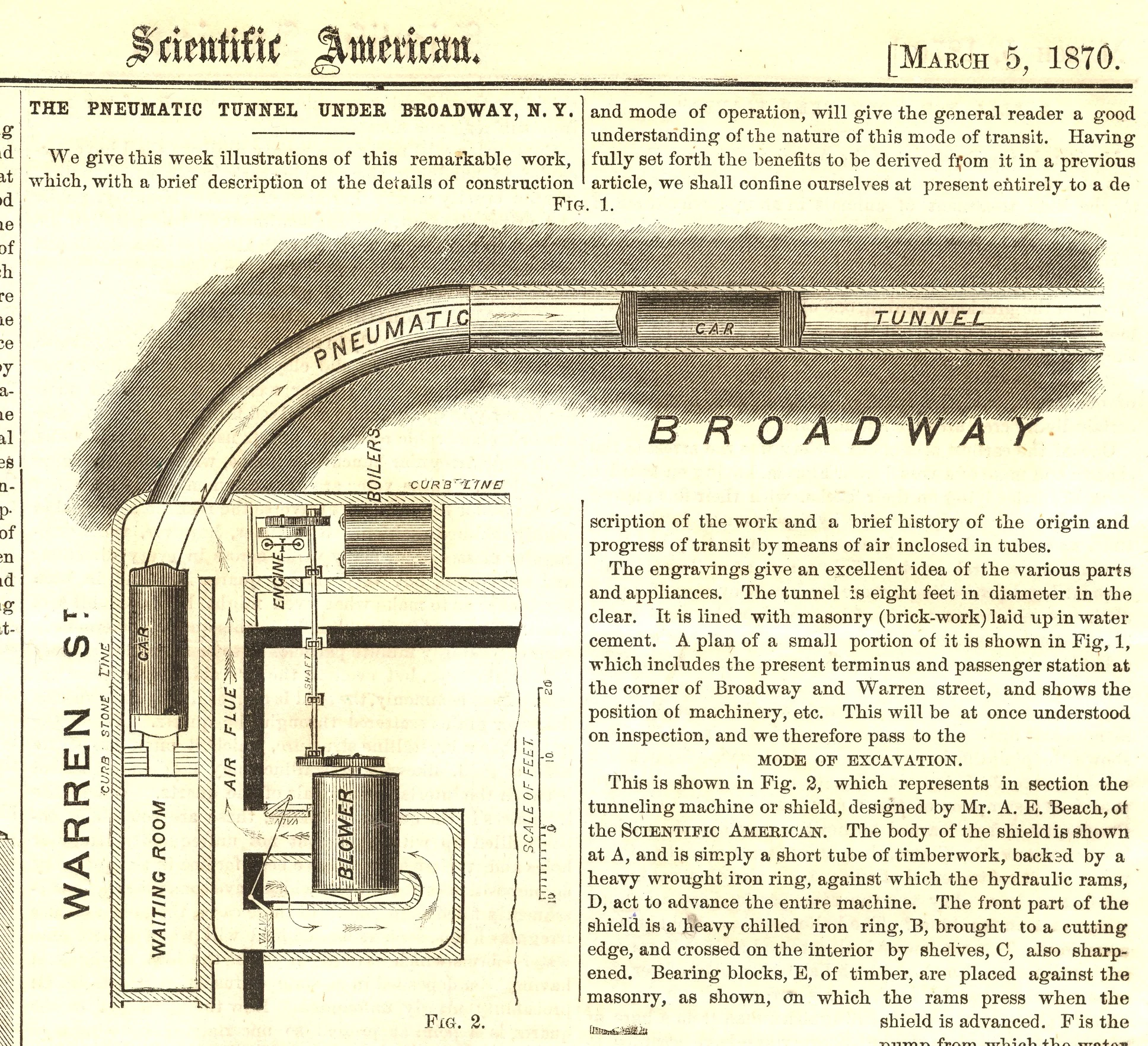
Pneumatic origins
Alfred Ely Beach patents and opens pneumatic transit
Beach patented his railway in 1867 and opened a short passenger demonstration beneath New York in 1870. The patent remains a primary technical record.
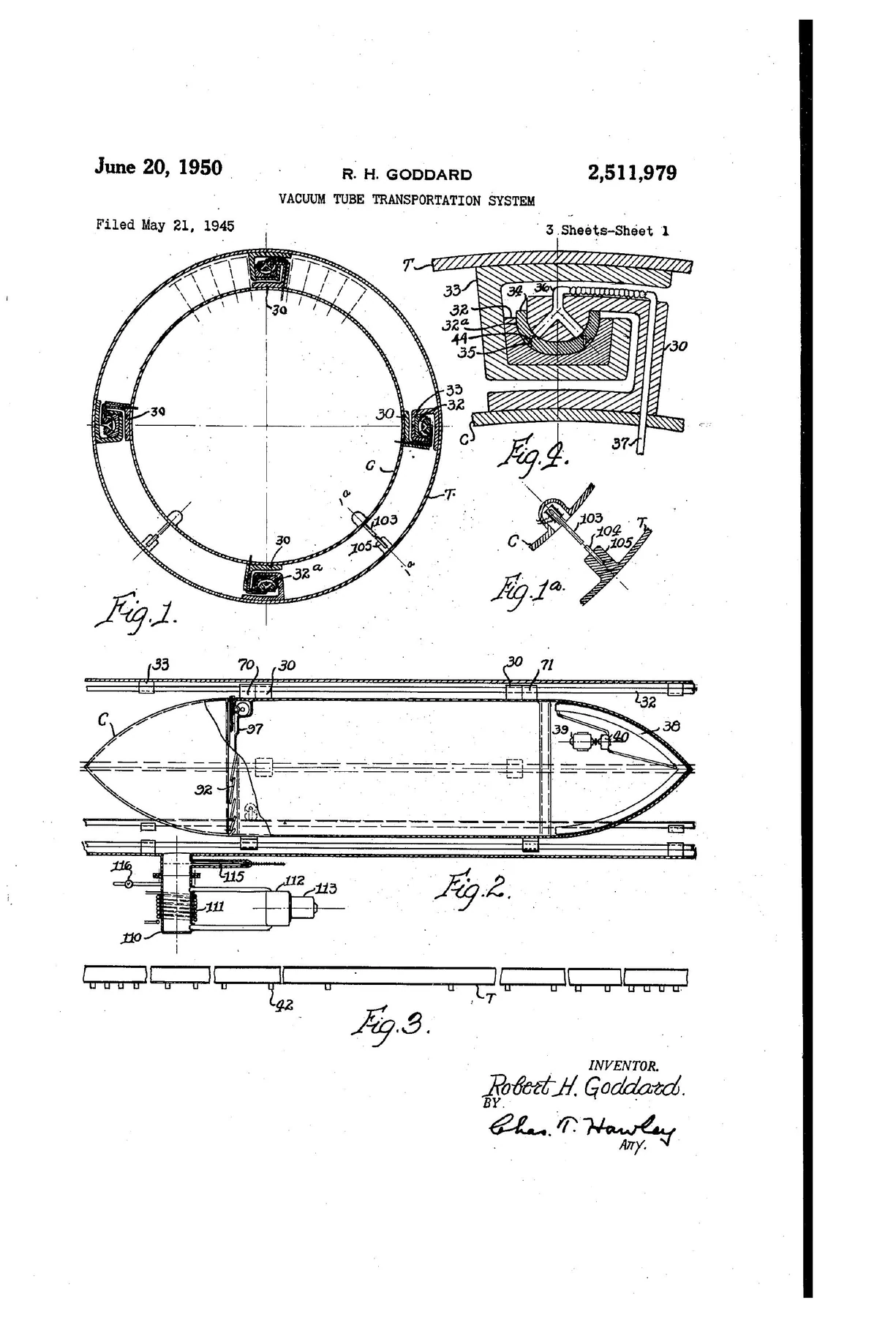
Vacuum and levitation
Robert Goddard sketches a vacuum-tube train
Goddard’s early notes explored magnetic suspension and travel in an evacuated tube, linking space-age physics to very-high-speed terrestrial transport.
Vacuum and levitation
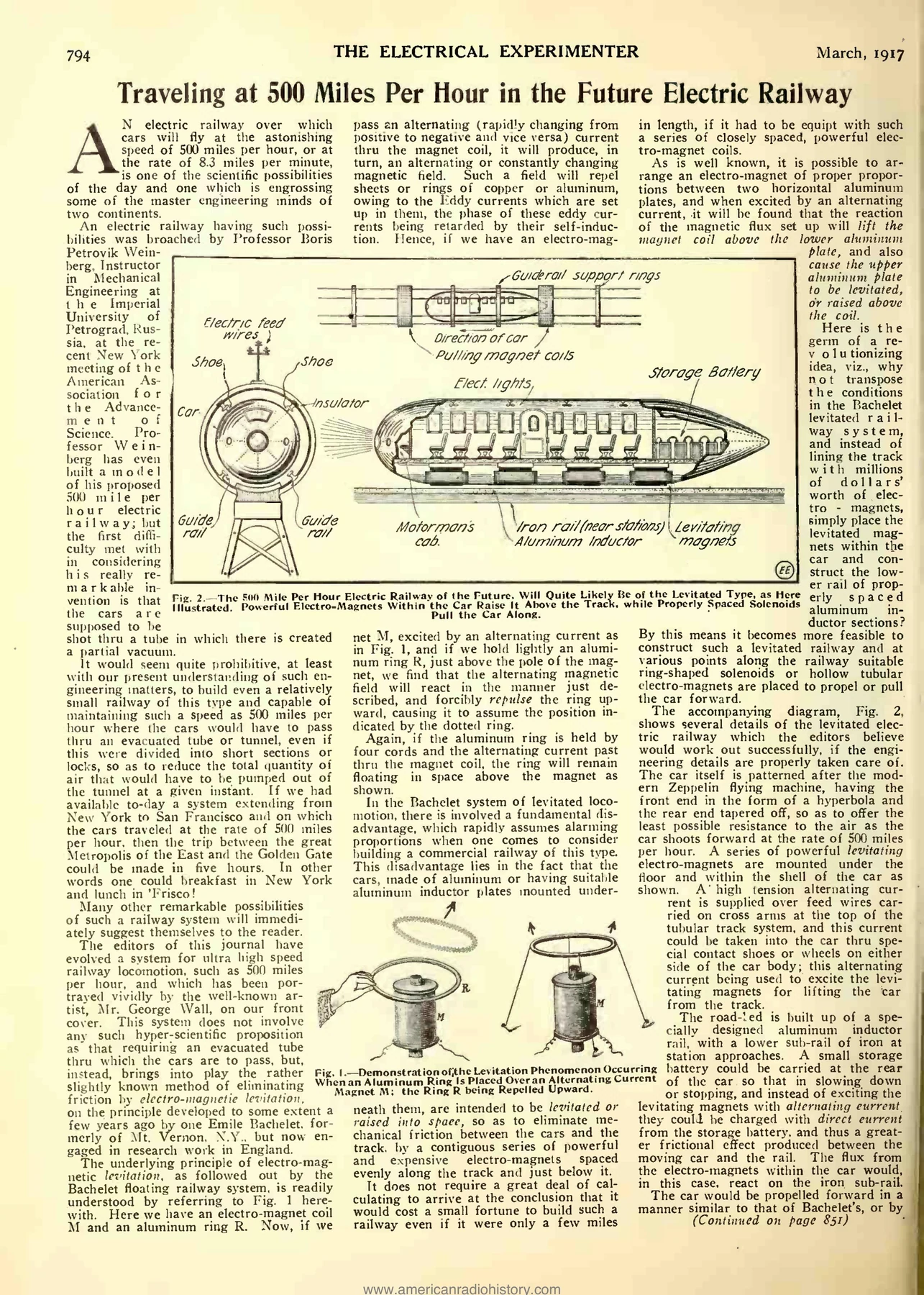
Boris Weinberg develops an electromagnetic vacuum train
The Russian physicist developed and tested small-scale magnetic transport concepts in a reduced-pressure tube, anticipating some elements of modern systems.
Vacuum and levitation
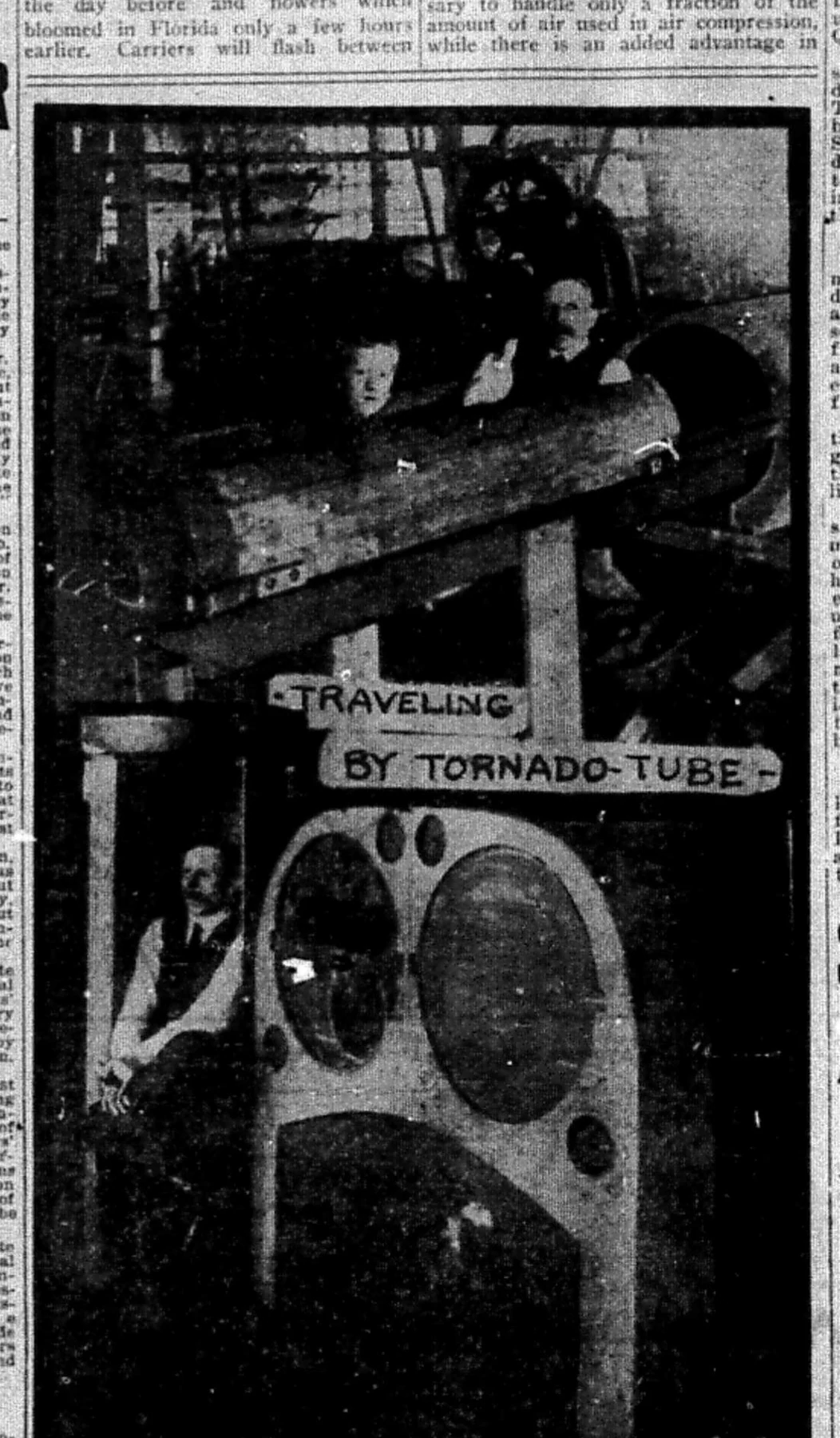
Joseph Stoetzel demonstrates a human pneumatic capsule
Stoetzel adapted pneumatic-mail architecture to move goods and people, including a small demonstration capsule. The account relies on the book cited as the source; no independent primary record has been located.
Vacuum and levitation
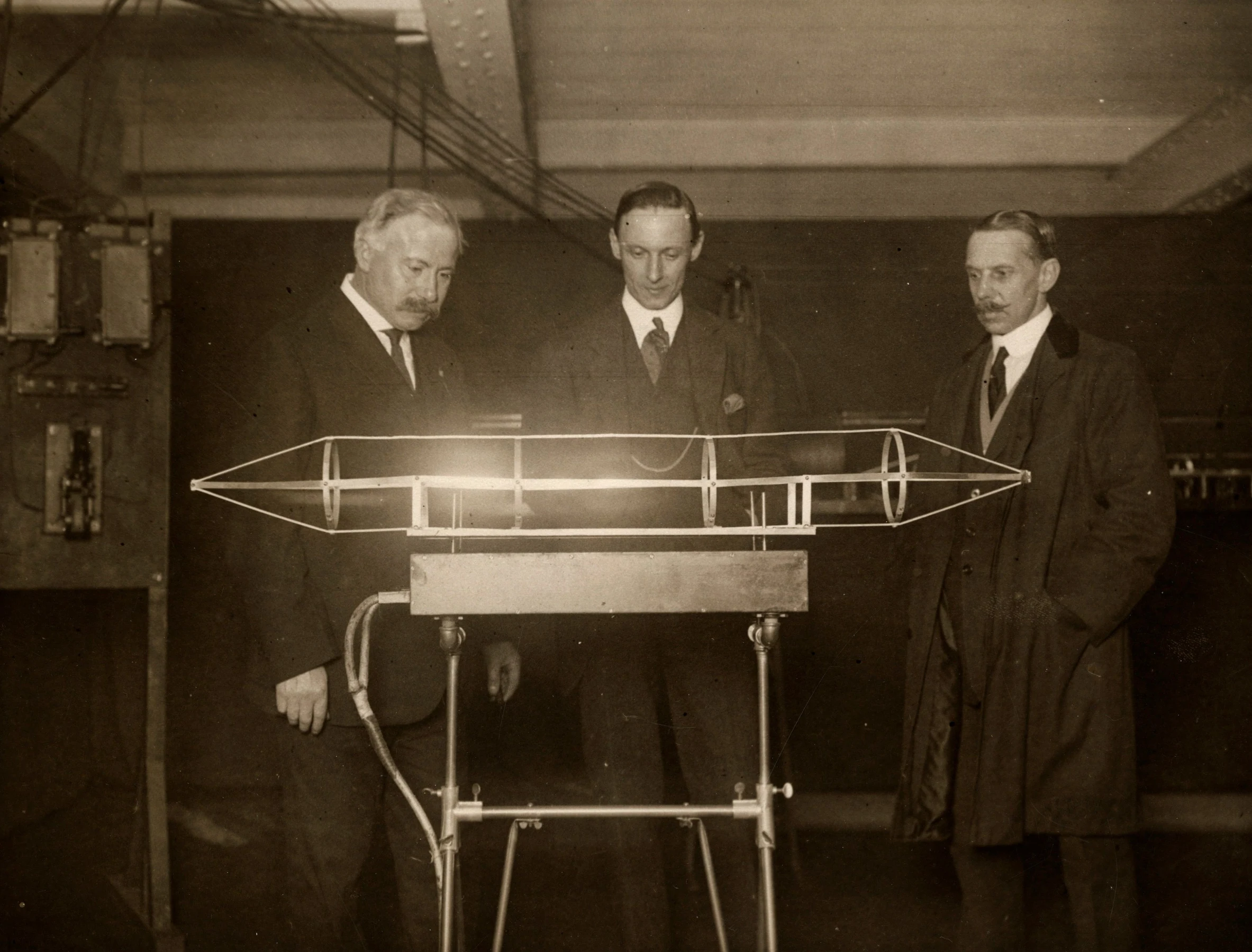
Émile Bachelet patents and demonstrates magnetic levitation
Bachelet filed a magnetic suspension apparatus in 1910, received U.S. patents in 1912 and publicly demonstrated a model railway in 1914. It advanced the history of levitation, without an evacuated tube.

Vacuum and levitation
Hermann Kemper patents magnetic levitation
Kemper’s German patent documented an electromagnetic suspension railway, a key step for later maglev and low-pressure-tube systems.

Vacuum and levitation
RAND publishes the Very High Speed Transit System
Robert M. Salter set out a detailed evacuated-tube network with vehicles, terminals and infrastructure logic rather than an isolated pod.
Vacuum and levitation
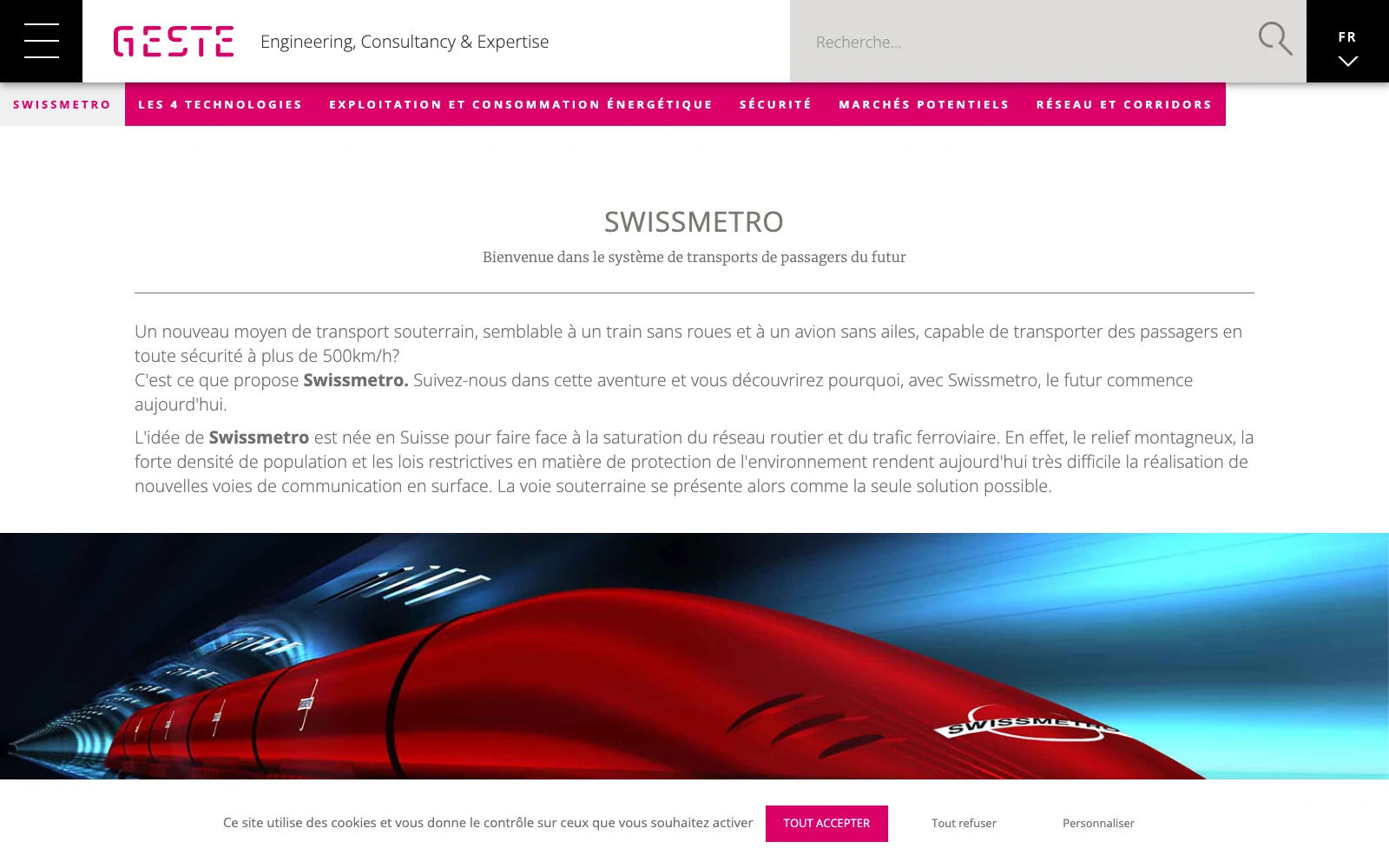
Swissmetro turns the vacuum-maglev idea into a national study
From Rodolphe Nieth’s early proposal to the 1990s main study, Swissmetro developed an underground, partially evacuated magnetic railway as a concrete Swiss infrastructure programme.
Vacuum and levitation
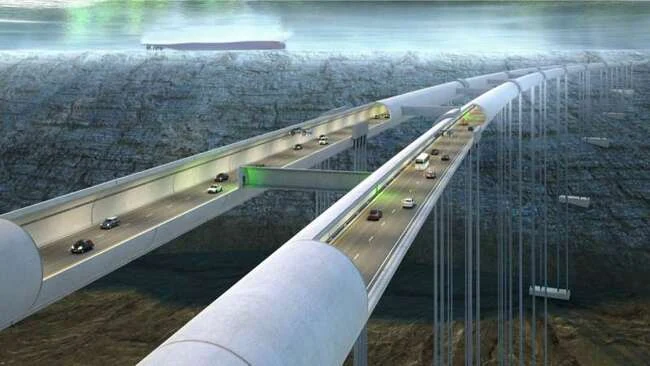
Submerged floating tunnels extend the tube history
Frank P. Davidson and Yoshihiro Kyotani studied submerged floating tunnels for transoceanic transport. It is a close relative of tube infrastructure—not evidence of a built system.

Vacuum and levitation
Gerard K. O’Neill develops Magnetic Flight
O’Neill proposed magnetically levitated vehicles in evacuated tunnels and patented elements of the system. The programme connected vactrain research with a long career in aerospace engineering.
Vacuum and levitation
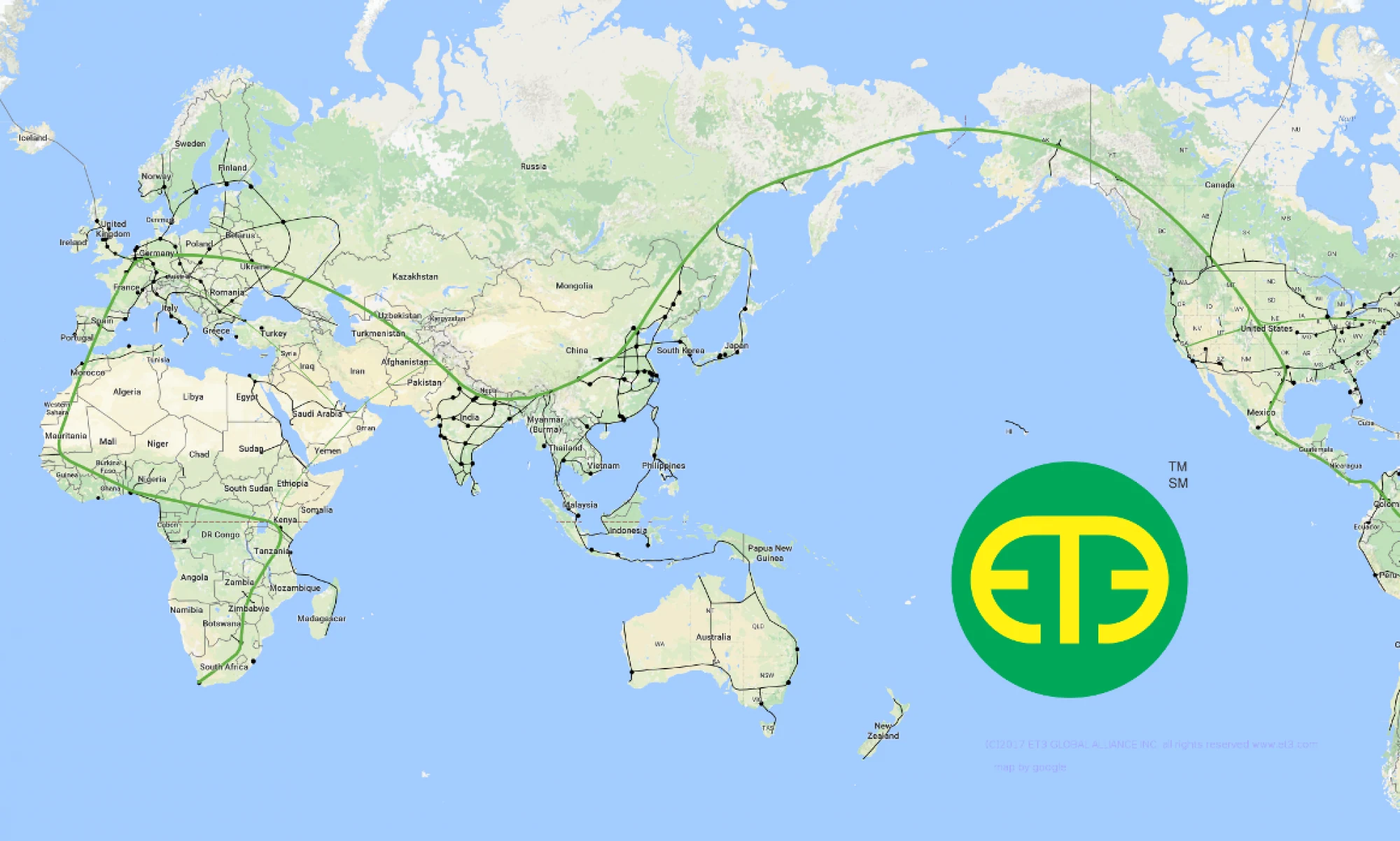
ET3 formalises evacuated-tube transport as a network concept
Evacuated Tube Transport Technologies promoted lightweight capsules, magnetic levitation and a global tube network, preserving the vacuum-train research line before the word hyperloop.

Vacuum and levitation
James Powell applies evacuated maglev to space launch
Powell and collaborators published the StarTram concept: magnetically levitated vehicles accelerated in an evacuated launch tube. It is a space-launch application, included as a technical branch of vactrain research.
Vacuum and levitation
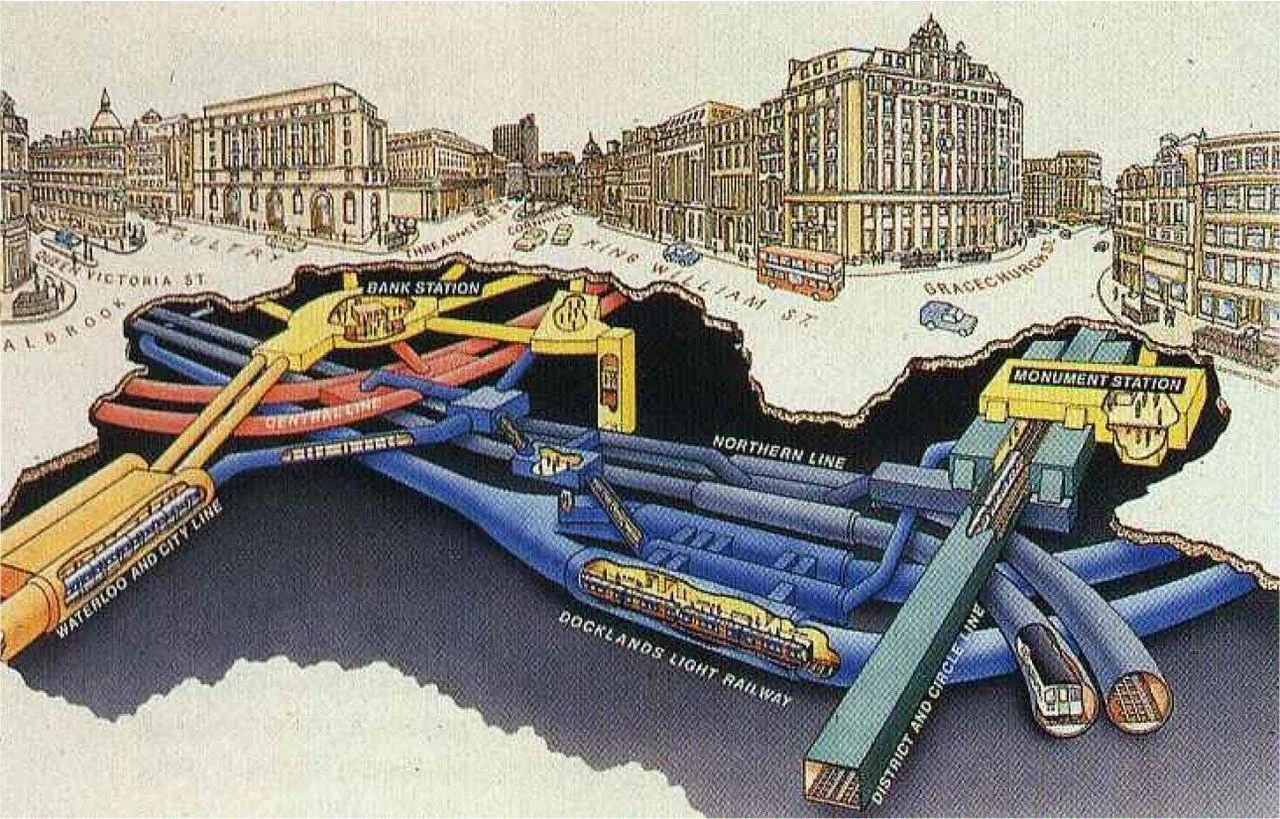
Foodtubes proposes underground freight pipelines
Noel Hodson’s Foodtubes work proposed capsule pipelines for food and freight. It belongs to the wider family of tube-logistics concepts, not to low-pressure passenger hyperloop.
The modern movement
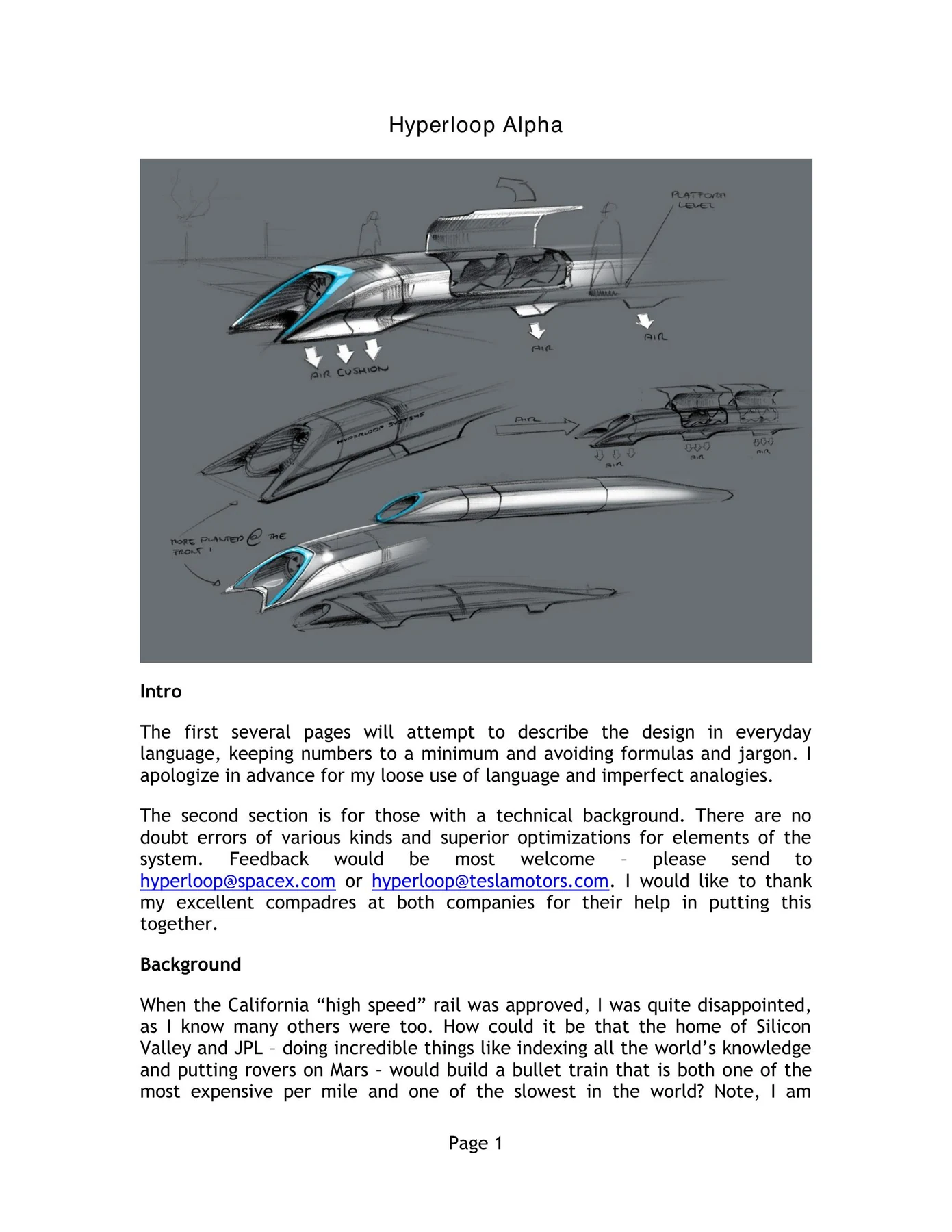
Hyperloop Alpha resets the global conversation
The 58-page open concept combined low-pressure tubes, aerodynamic pods, linear propulsion and an LA–San Francisco case. Its most important effect was to catalyse the debate.
The modern movement
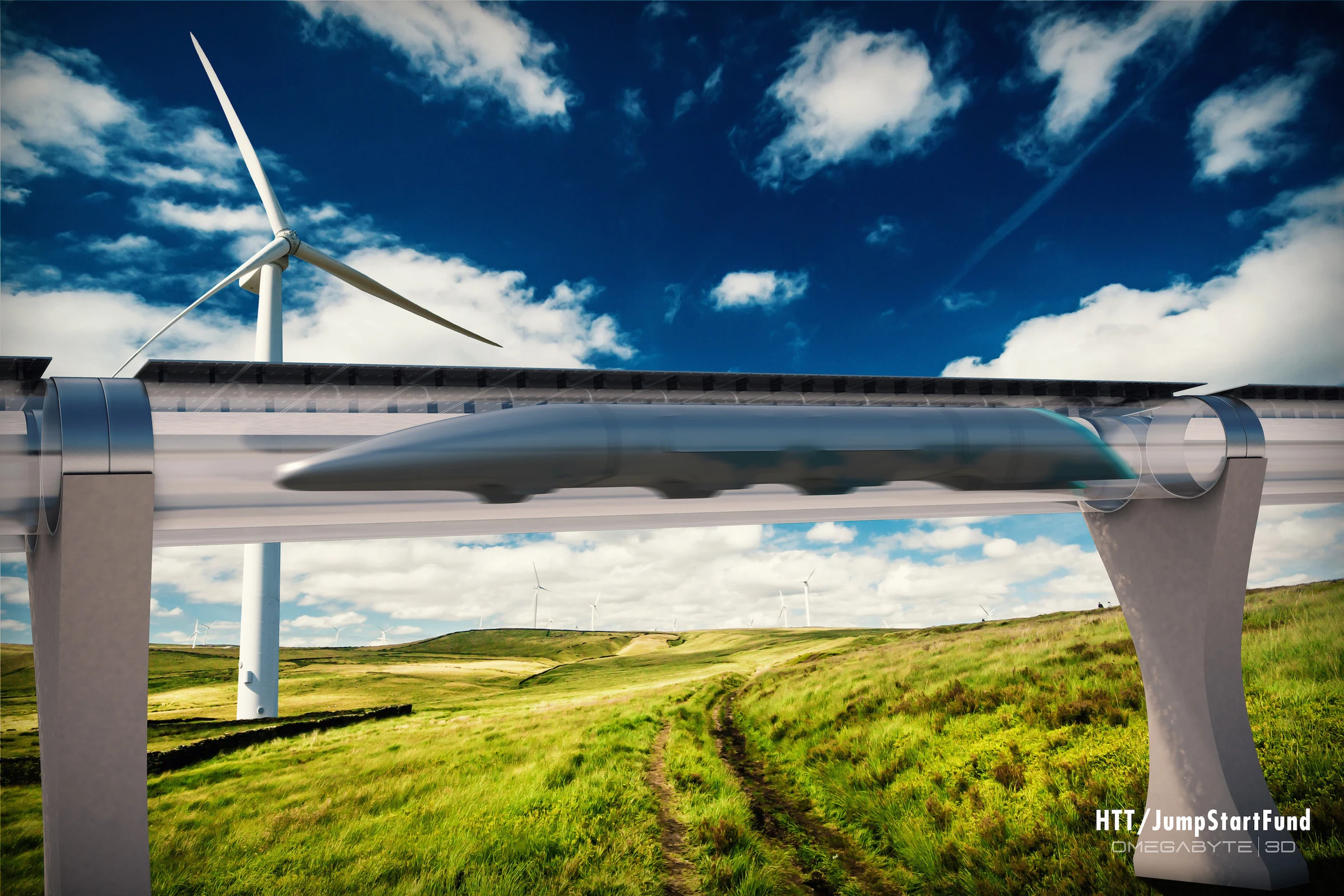
Hyperloop Transportation Technologies is founded
HyperloopTT emerged from JumpStartFund with a crowd-powered model that brought an international network of collaborators into the engineering effort.

The modern movement
Hyperloop Technologies, later Hyperloop One, is founded
Shervin Pishevar and Josh Giegel co-founded a venture-backed company that later became Hyperloop One and, after Virgin’s investment, Virgin Hyperloop One.
The modern movement
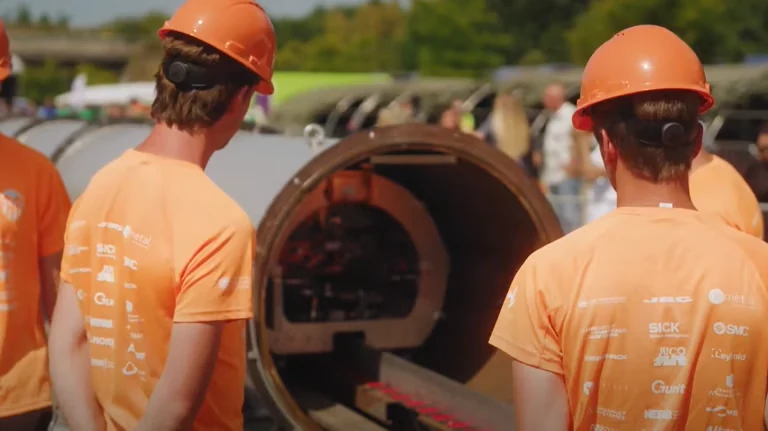
SpaceX launches the Hyperloop Pod Competition
The competition mobilised universities worldwide and created a generation of teams whose work later fed companies, research programmes and European Hyperloop Week.
The modern movement
A global developer and research ecosystem emerges
The movement expanded beyond its two best-known companies. Programmes linked to CASIC and China Railway, DGW, ET3, Hyper Chariot, TransPod, Hardt, Nevomo and Zeleros joined universities and test centres such as EuroTube, KRRI and SWJTU. The field now includes public programmes, companies, test centres, suppliers, universities and student teams, each contributing a different part of the ecosystem.
From testing to industry
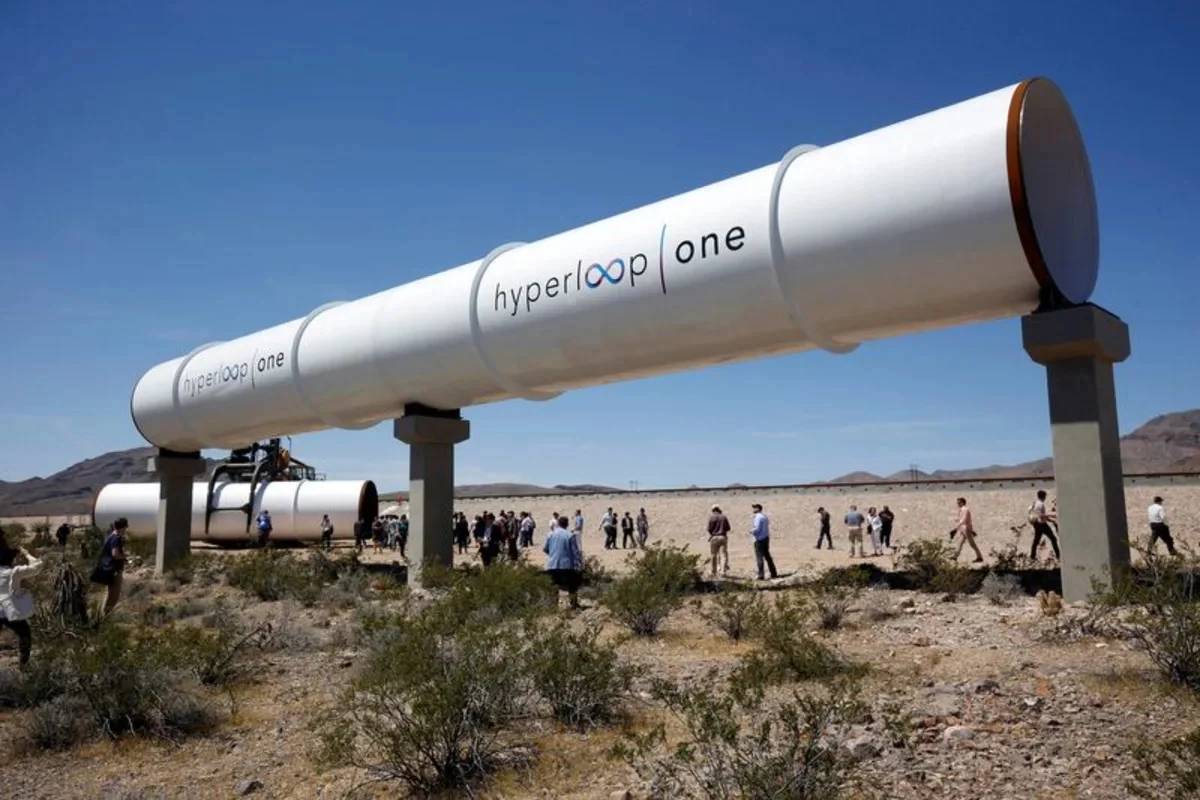
Open-air propulsion tests and full-scale tubes appear
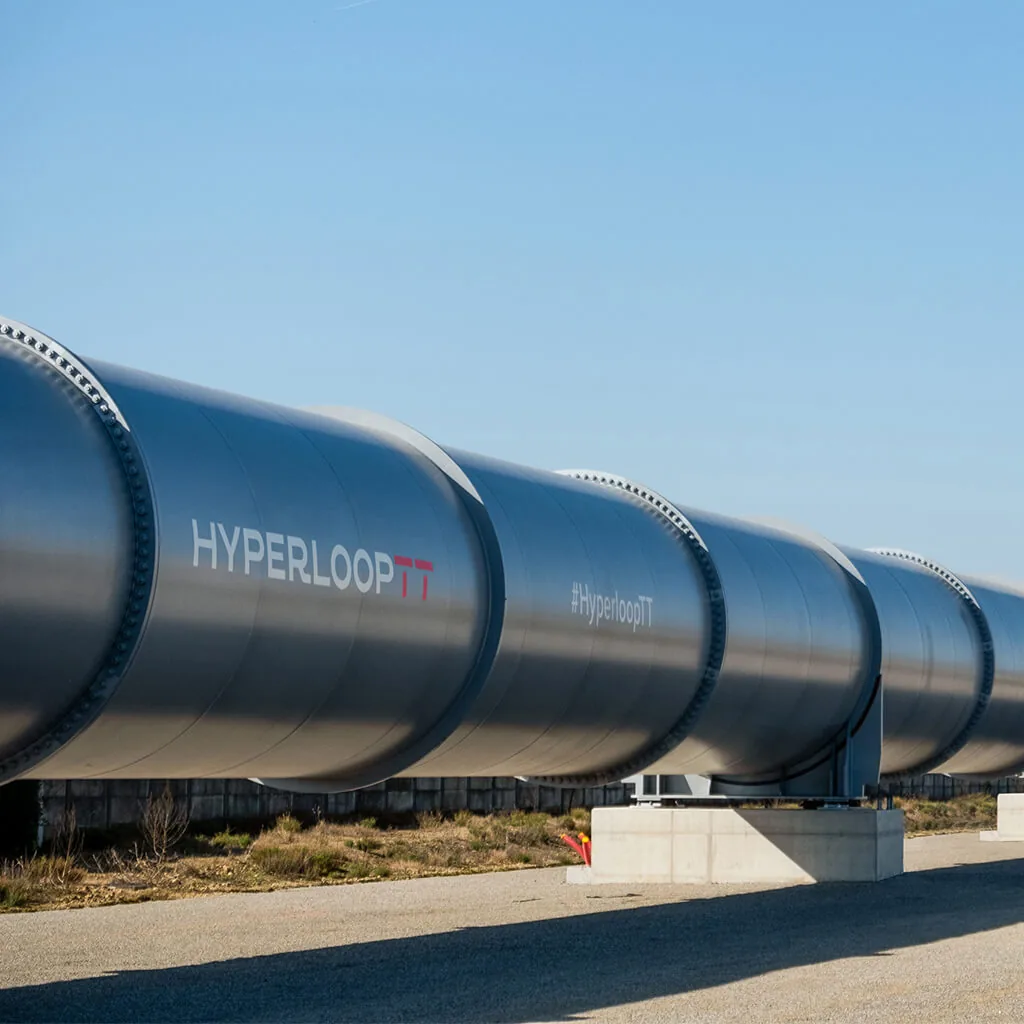
Hyperloop One demonstrated propulsion in Nevada and started DevLoop; HyperloopTT advanced full-scale facilities in Toulouse. The field moved from drawings to hardware.
From testing to industry
Route studies spread across several continents
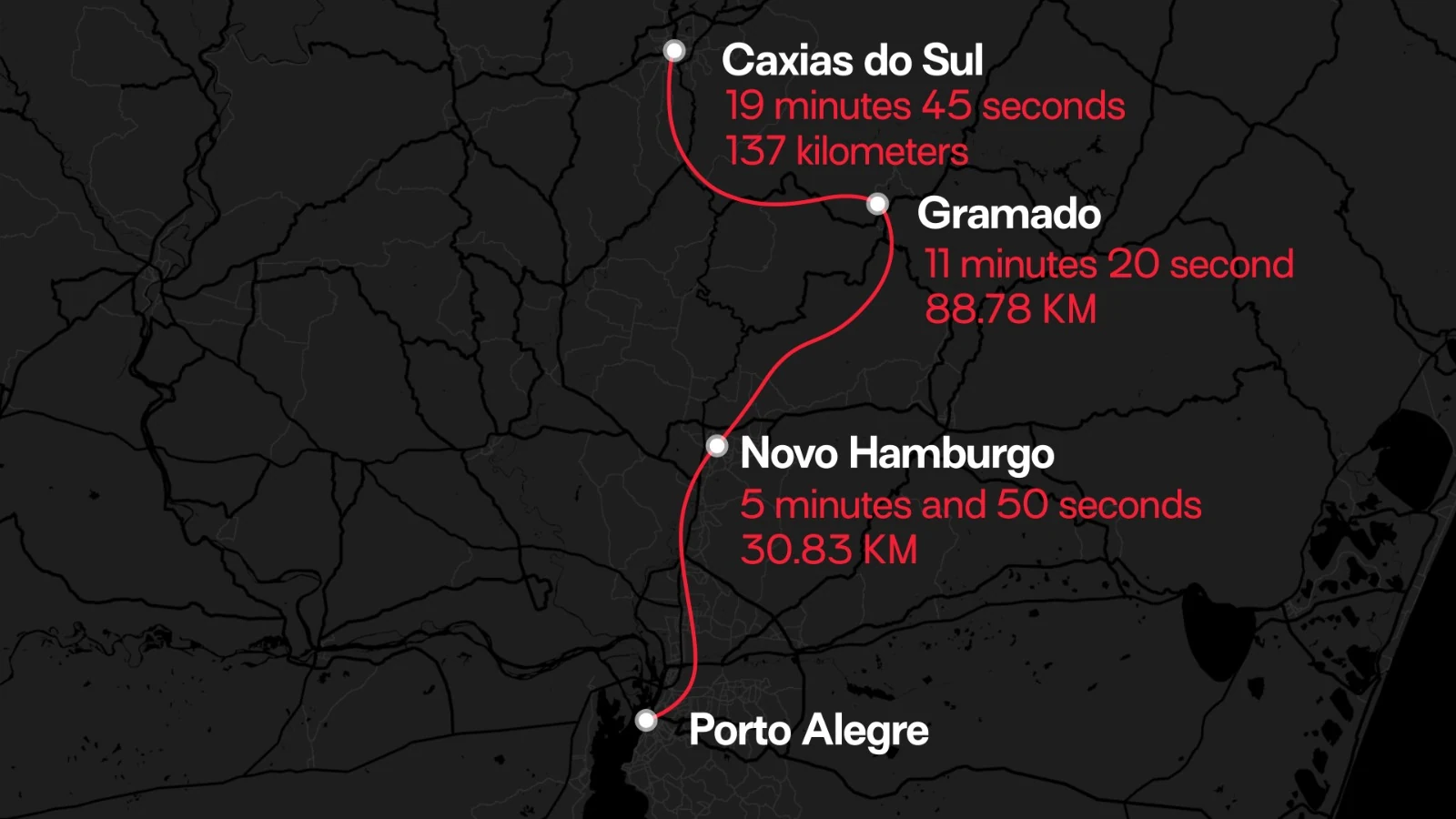
Route studies and memoranda of understanding appeared in the United States, UAE, Russia, India, Indonesia and Europe. Some produced published feasibility reports; many more remained announcements that never reached construction or a funded test.
From testing to industry
DevLoop runs the integrated system; Virgin invests
Hyperloop One reported full-system tests at DevLoop and later adopted the Virgin Hyperloop One name. The same period produced Harvard cases on both leading business models.
From testing to industry
Quintero One, the first full-scale capsule, is unveiled
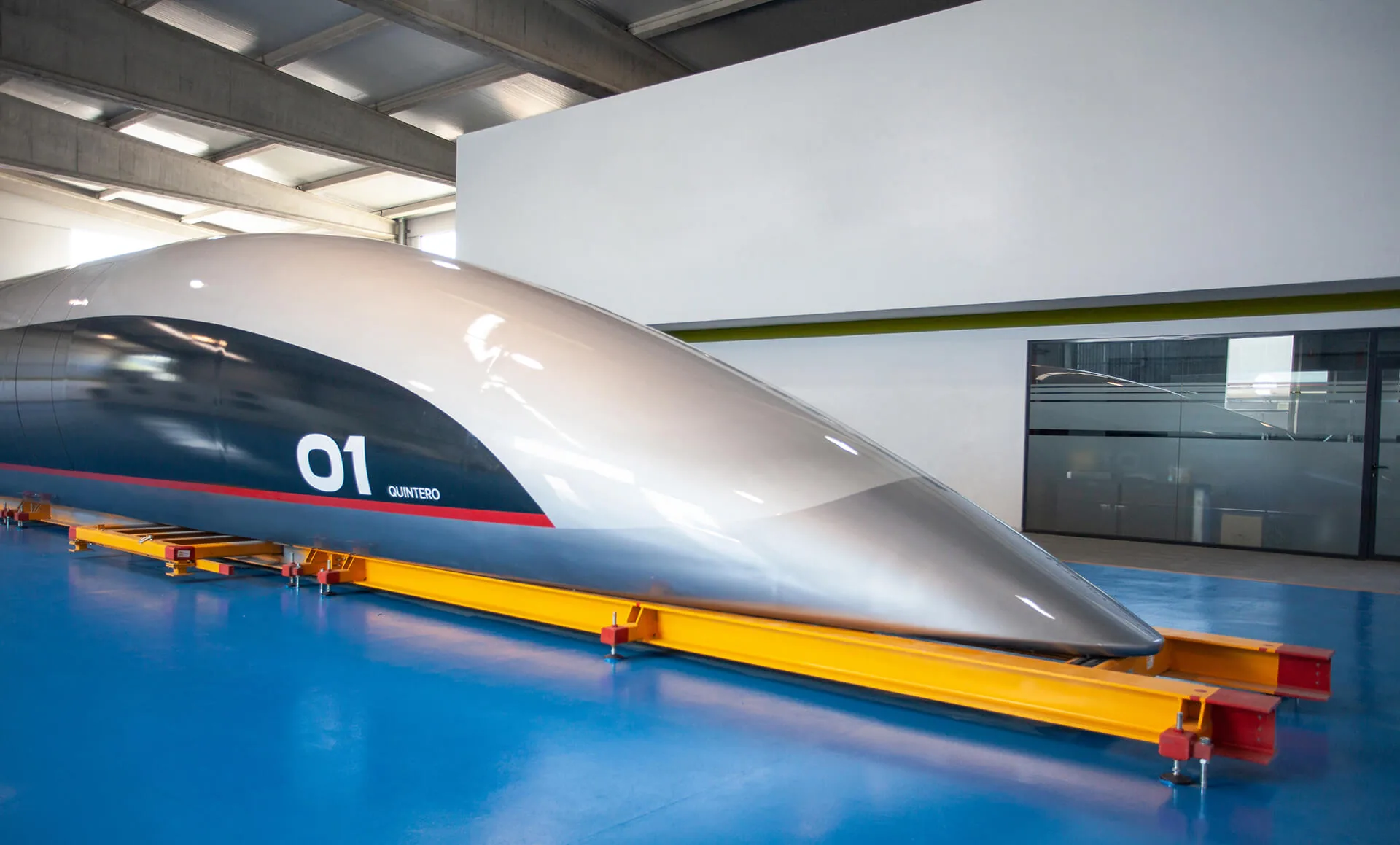
HyperloopTT presented Quintero One in Puerto de Santa María, Spain: a 32 m passenger capsule with a 15 m cabin, weighing about 5 tonnes and built from 82 carbon-fibre Vibranium panels at partner Airtificial’s aerospace plant. It was then shipped to the Toulouse R&D centre for integration.
From testing to industry
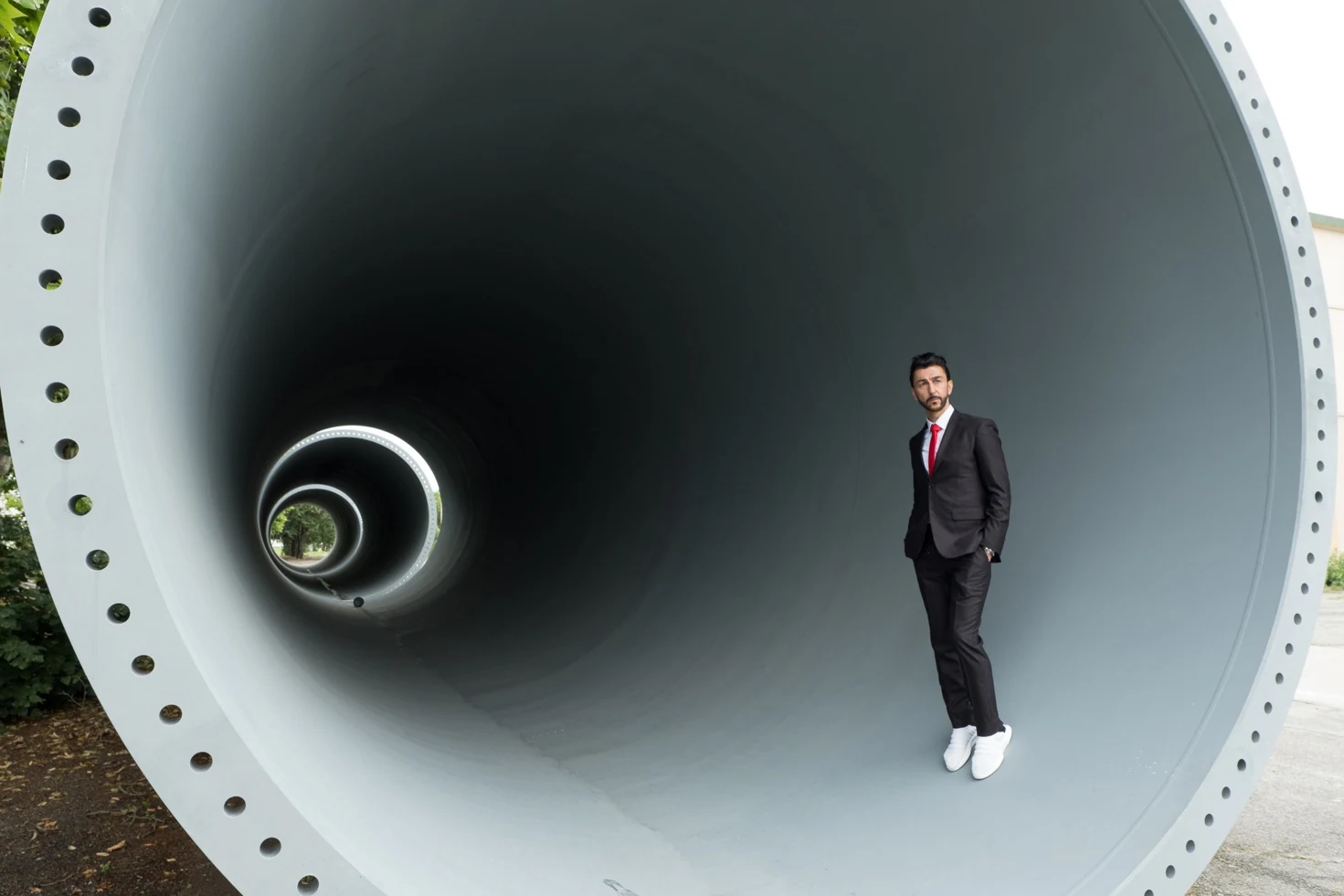
The first full-scale test track opens in Toulouse
Construction of a 320 m, 4 m-diameter full-scale tube began in April 2018 at Francazal airport and the completed system was shown in February 2019, making Toulouse the first full-scale hyperloop test track. HyperloopTT left the site in 2023 and moved its European operations to Italy in 2024.
From testing to industry
Feasibility, test centres and interoperability become central
Great Lakes and other public studies matured while Hardt demonstrated lane switching and European operators began formal standardisation work.
From testing to industry
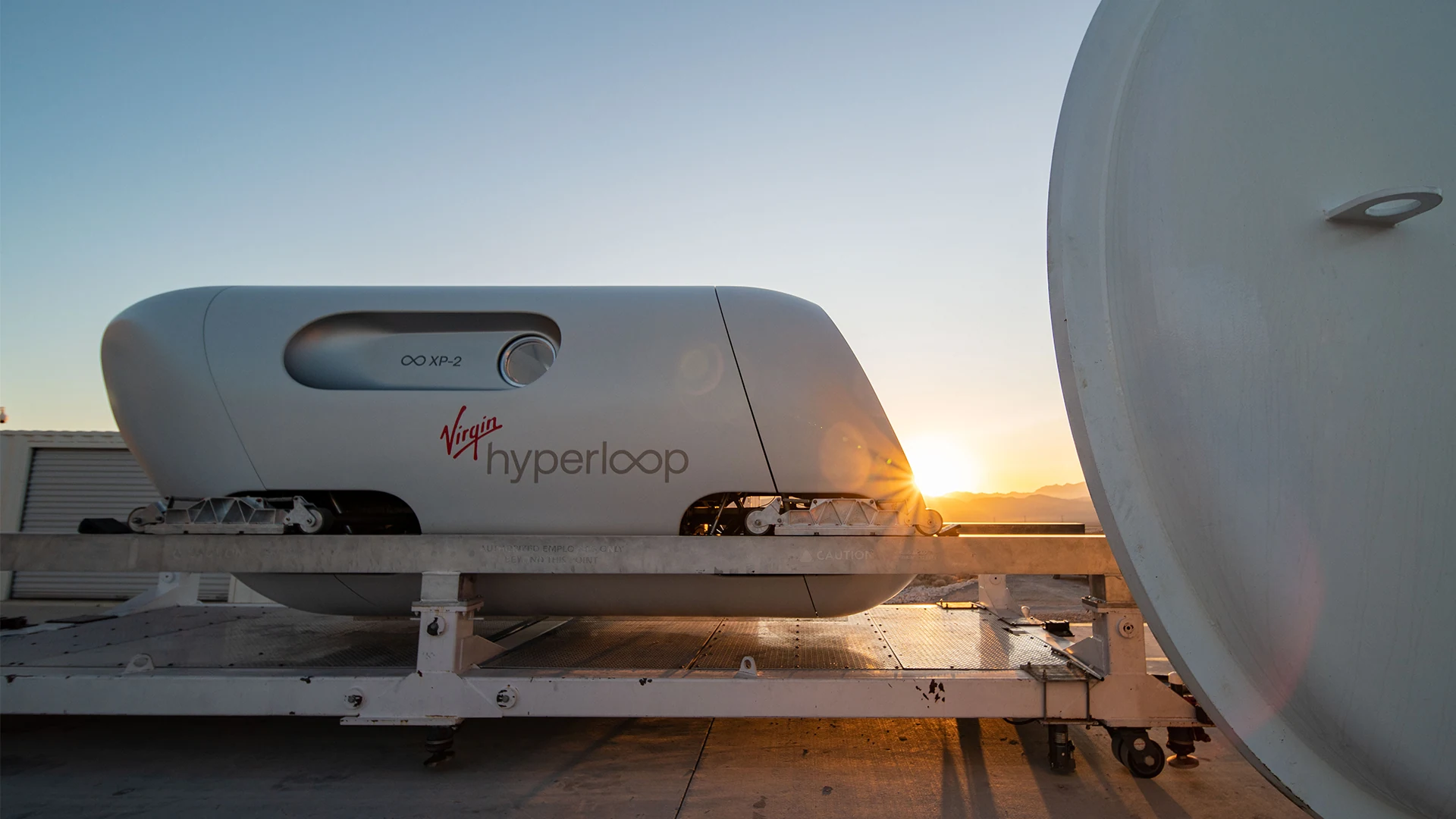
Virgin Hyperloop carries its first human passengers
Josh Giegel and Sara Luchian rode the XP-2 vehicle at the Nevada test site after hundreds of uncrewed runs. It was a low-speed demonstration, not commercial service.
From testing to industry
Governments formalise feasibility and standards work
The EU mobility strategy, CEN/CENELEC JTC 20, U.S. DOT review and Transport Canada assessment moved hyperloop into structured public assessment and regulatory processes.

From testing to industry
European Hyperloop Week succeeds the SpaceX competition era
Student teams created an independent annual programme combining technical competition, safety verification and industry exchange.
From testing to industry
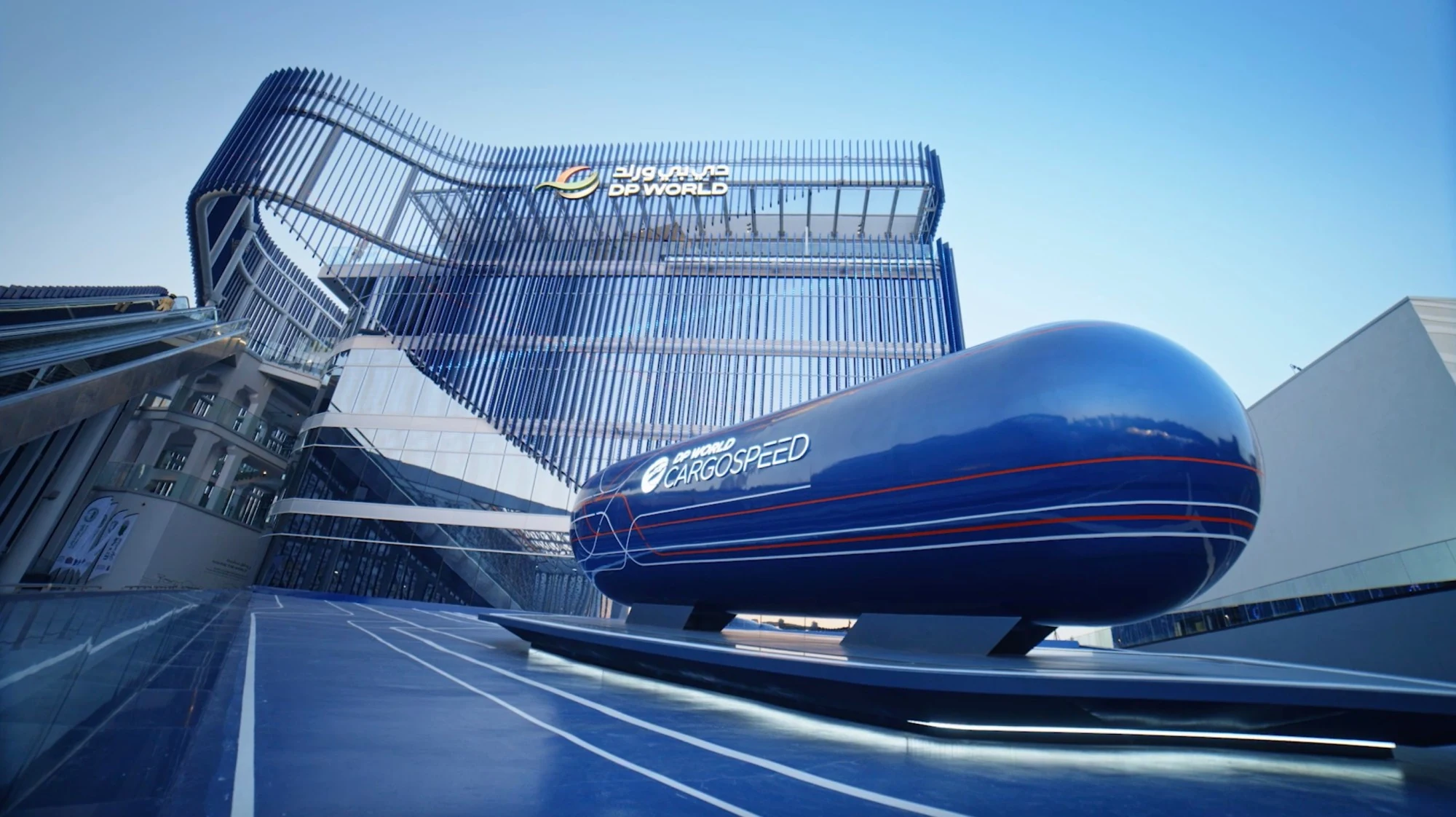
Virgin Hyperloop pivots away from passengers
The company reduced staff and concentrated on freight, then returned to the Hyperloop One name. The reversal exposed the financial and market risks of full-system development.
From testing to industry
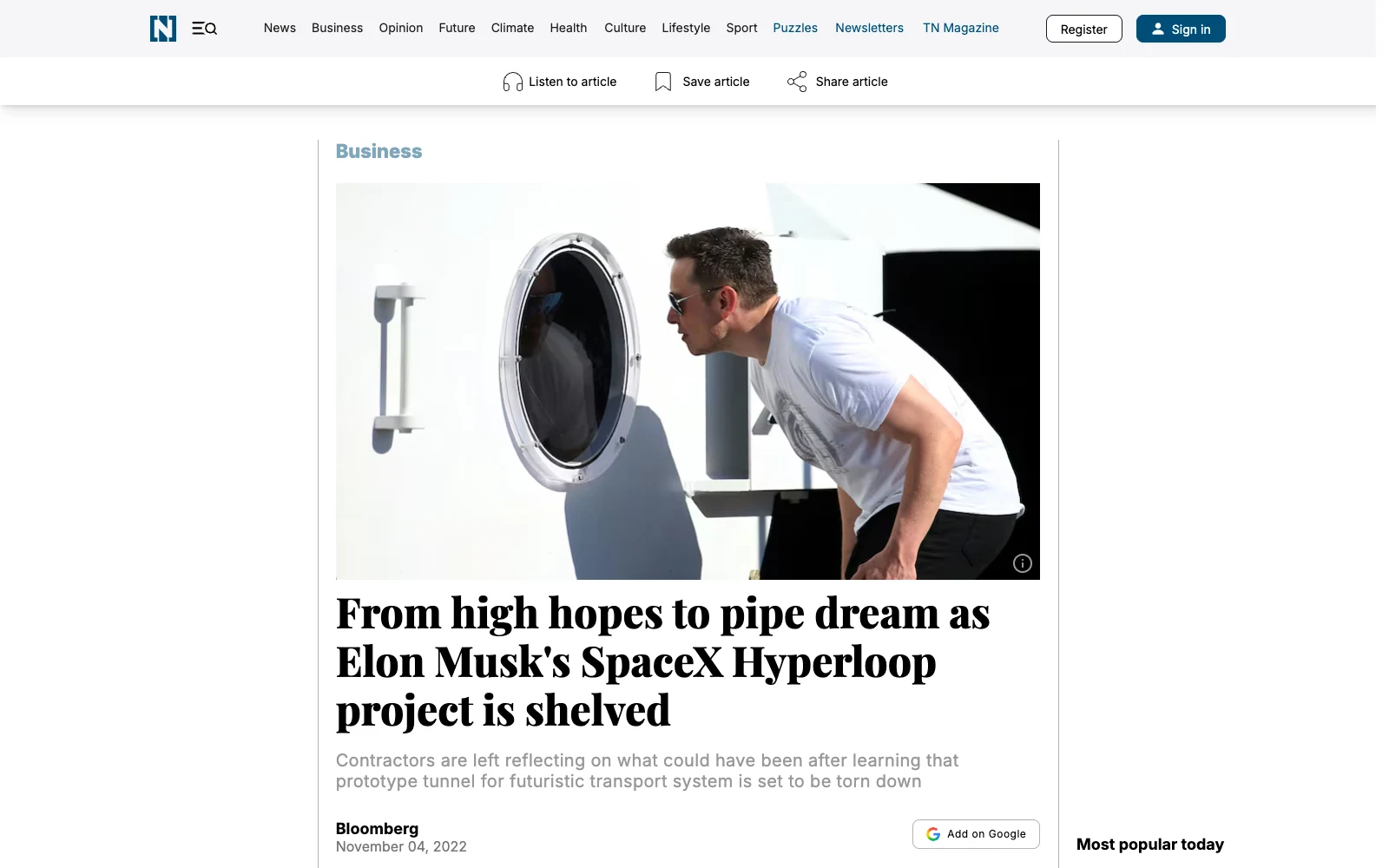
SpaceX removes the Hawthorne competition tube
The roughly 1.6 km subscale tube built for the SpaceX Hyperloop Pod Competition was dismantled after the competition era. The student movement continued through independent programmes including European Hyperloop Week.
From testing to industry
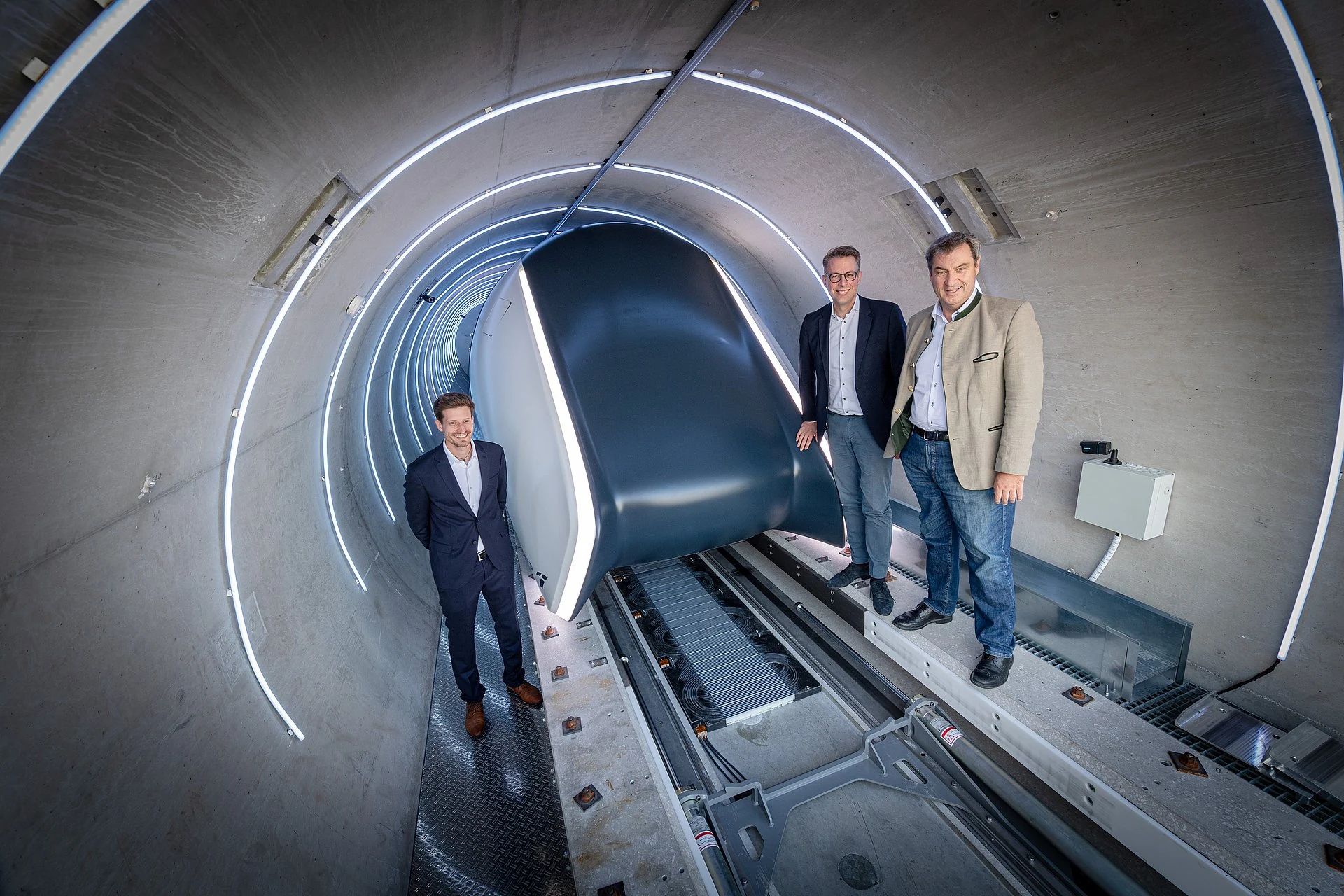
TUM performs a certified passenger run under vacuum
TUM’s 24 m full-scale demonstrator carried passengers after TÜV Süd approval, creating a controlled test platform for propulsion, levitation, vacuum and safety.
From testing to industry
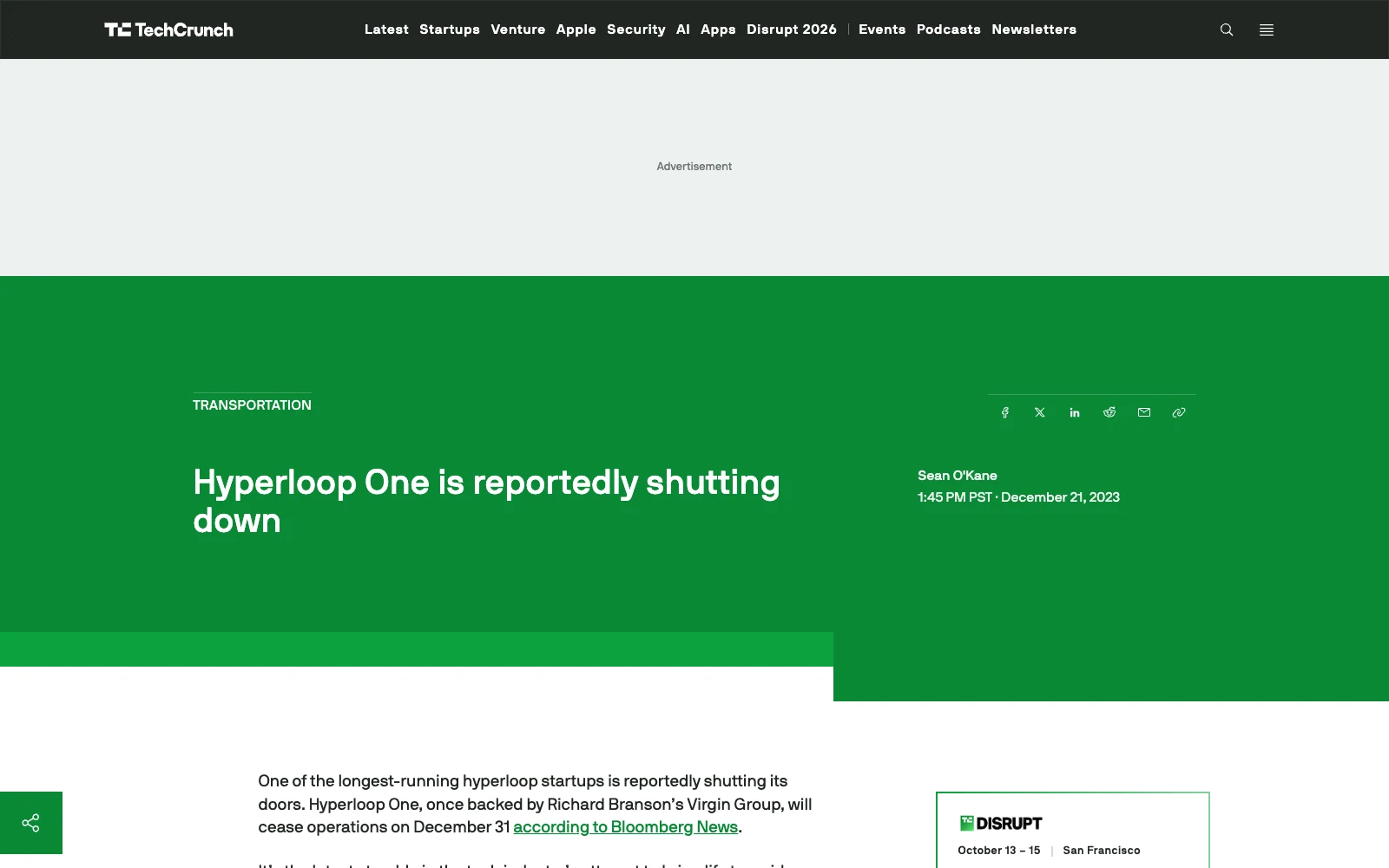
Hyperloop One ceases operations
After raising substantial capital, building DevLoop and conducting the 2020 passenger demonstration, Hyperloop One closed without securing a commercial construction contract. Its closure is part of the history, not a judgment on every developer.
From testing to industry
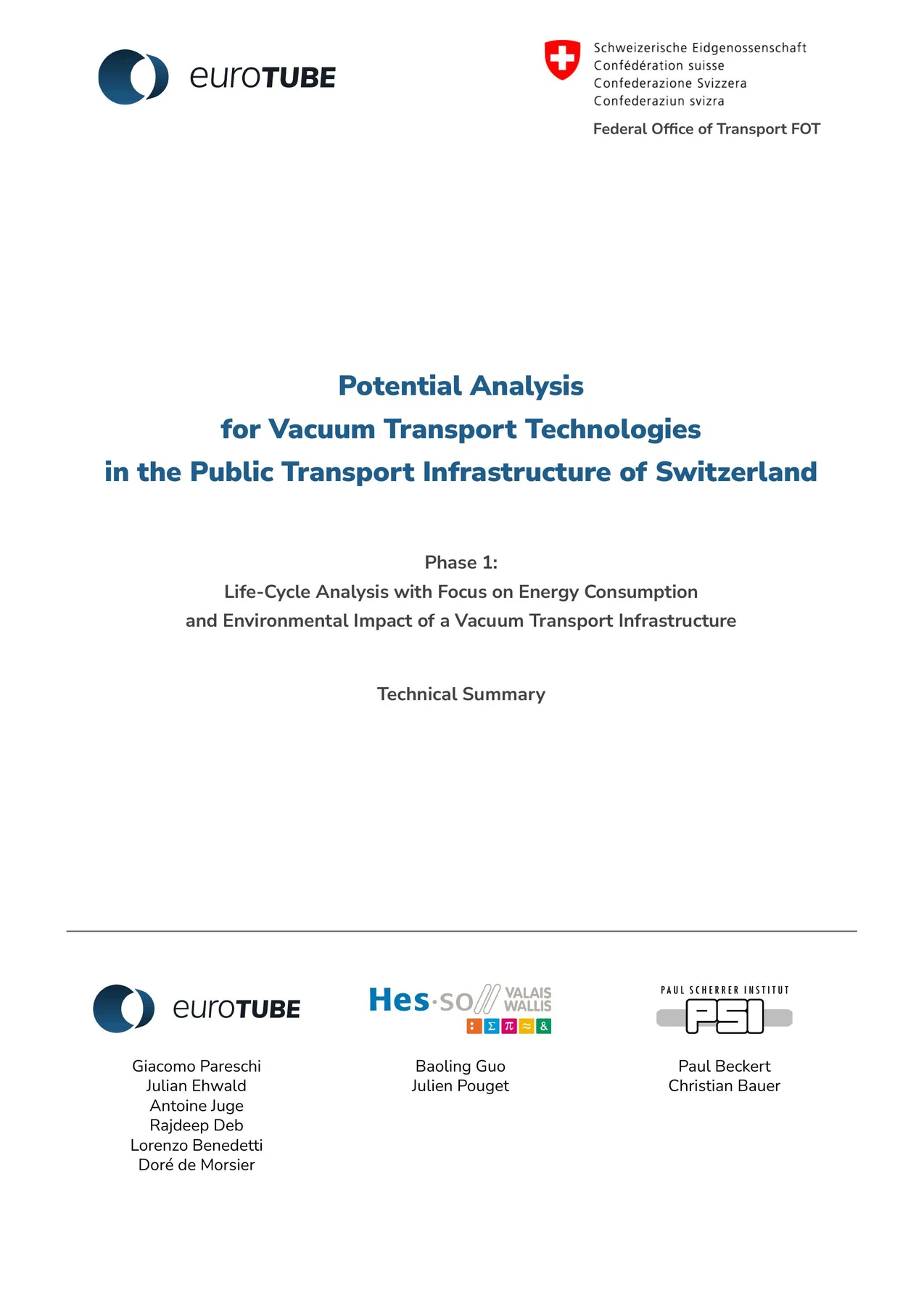
Open, interoperable test infrastructure expands
The European Hyperloop Center opened in Veendam, while IIT Madras and TuTr completed a 422 m tube in India. Test results became more distributed and internationally accessible.
From testing to industry
Hyper4Rail works toward a harmonised European concept
The EU-backed programme brings developers and rail-sector actors together around common building blocks, subsystem validation and an industrialisation roadmap.

From testing to industry
Hyper Transfer publishes its Phase 1 results
CAV published the Veneto feasibility outcome and the proposed next step: a certification test track, still subject to activation and funding.
From testing to industry
Active developers report new test milestones—and setbacks
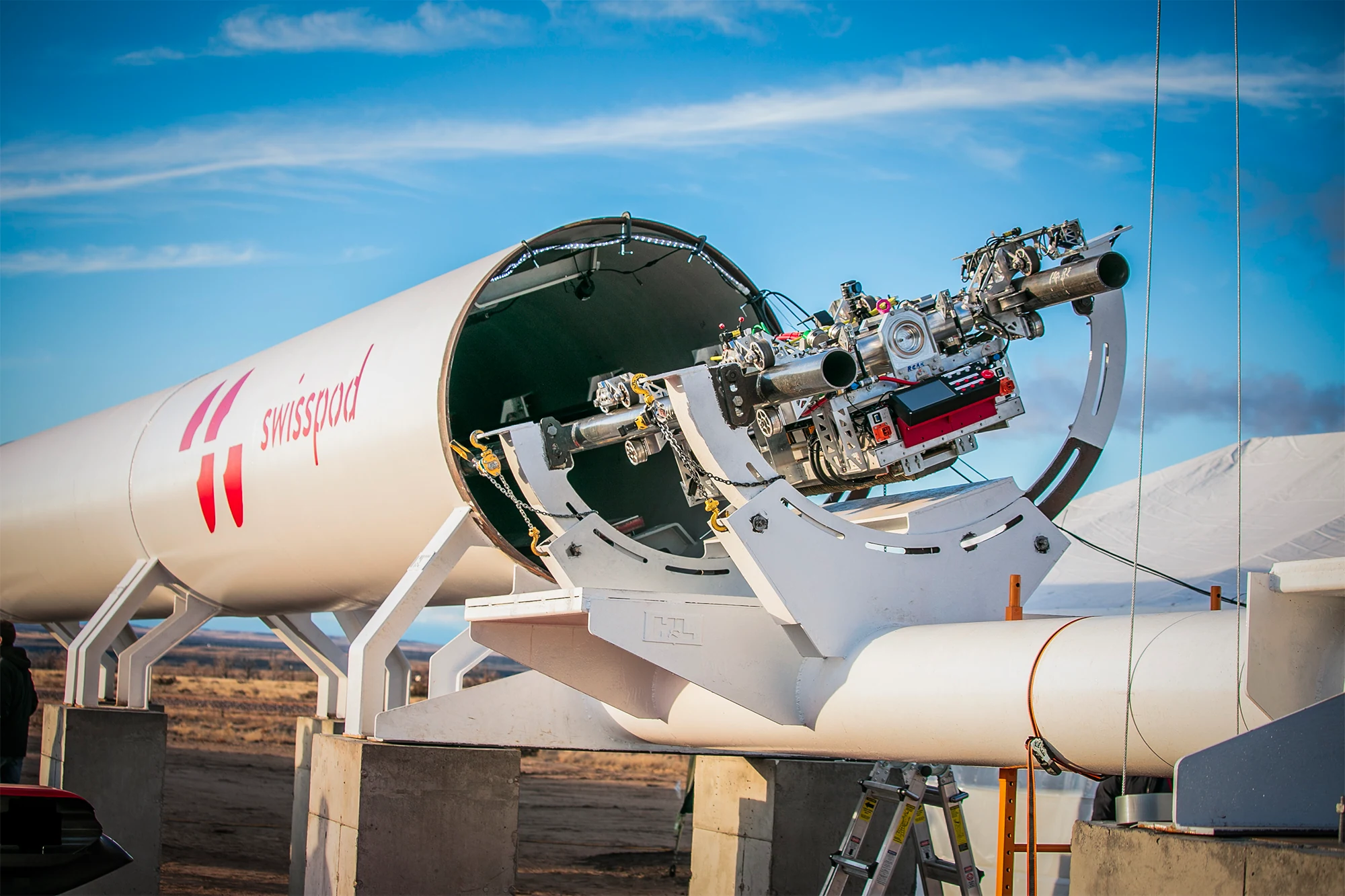
Hardt and Swisspod reported speed and switching milestones, while company restructurings showed that verified tests, company claims and financial health do not always coincide.

From testing to industry
European Hyperloop Week brings student teams back to the track
From 13 to 19 July 2026, university teams from around the world gathered in Veendam, the Netherlands, to present vehicles and full-scale pods and compete across several categories before a panel of judges. The annual event keeps training the next generation of hyperloop engineers.